When Should You Replace Your German Car’s Spark Plugs?
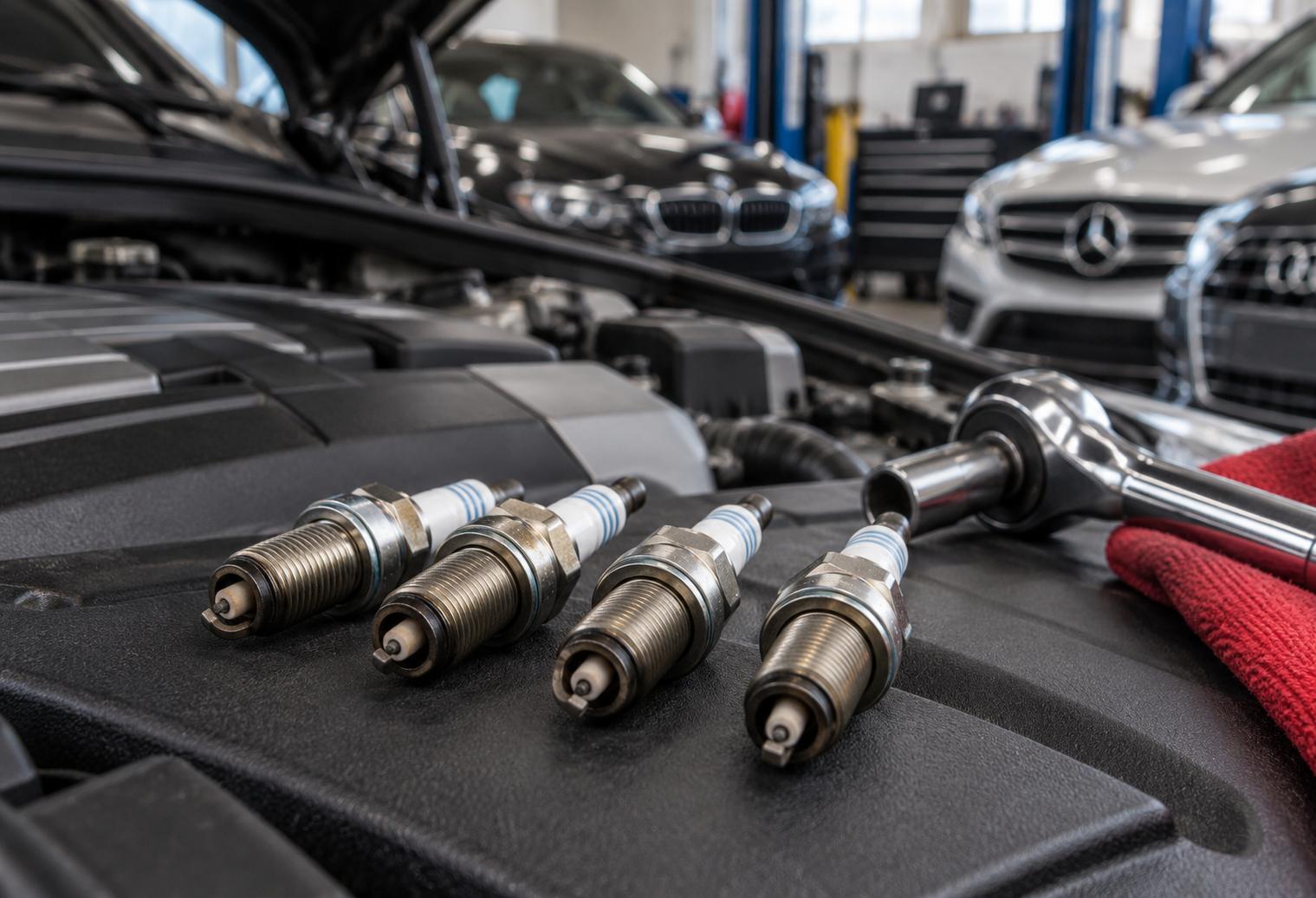
Fort Worth driving can put plenty of demand on a German car, especially during long stretches of summer heat, stop-and-go traffic, and frequent highway trips across Tarrant County. Spark plugs are small components, but worn plugs can affect how smoothly your engine starts, accelerates, and runs.
Quick answer: Your German car’s spark plugs should be replaced according to the maintenance interval specified for its particular engine, and sooner if testing shows they are worn or causing performance problems. The correct interval varies by manufacturer, model, engine, and spark plug type, so mileage alone should not determine replacement. Misfires, rough starts, hesitation, or an illuminated check engine light are reasons to have the ignition system inspected.
What Fort Worth drivers should know
- Spark plug replacement intervals vary considerably among German vehicles, so the maintenance schedule for your exact model and engine should guide service timing.
- Fort Worth heat and frequent stop-and-go driving can make existing ignition or engine problems more noticeable.
- A misfire does not automatically mean the spark plugs are bad because ignition coils, fuel delivery, wiring, and other engine systems can produce similar symptoms.
- Drivers regularly traveling I-35W, I-30, Loop 820, and other busy Tarrant County routes may notice hesitation or poor acceleration quickly when an ignition problem develops.
- Replacing spark plugs correctly involves using the appropriate plugs and installation procedure for the engine.
Why Does Spark Plug Replacement Matter for Fort Worth Drivers?
Spark plug replacement matters for Fort Worth drivers because worn or fouled plugs can contribute to hard starting, rough running, hesitation, and engine misfires during everyday local driving. Those problems can become particularly inconvenient when a vehicle needs dependable performance through heavy traffic, hot-weather commuting, or repeated short trips.
Summer temperatures in North Texas can already place significant demands on vehicles. Add slow traffic around Downtown Fort Worth, repeated acceleration along I-30, or daily commuting through the Metroplex, and an ignition problem may become difficult to ignore.
Tim’s German Auto helps local drivers diagnose and maintain German vehicles. We can evaluate symptoms rather than assuming every rough-running engine simply needs new spark plugs.
What Do We Commonly See With Spark Plugs on German Cars?
German cars with aging spark plugs may develop subtle drivability symptoms before the problem becomes severe, although the exact symptoms vary by engine and vehicle. A driver may first notice a slightly rough idle, slower starting, hesitation during acceleration, or a warning light.
These are professional field observations rather than a claim that every vehicle will behave the same way. Modern German engines use sophisticated ignition, fuel, and engine-management systems, so proper diagnosis matters.
Fort Worth drivers should also remember that heat does not automatically ruin spark plugs. Instead, demanding local driving conditions can expose an existing weakness in the ignition or engine-management system.
How Can Worn Spark Plugs Affect Your German Car?
Worn spark plugs can affect combustion quality, which may lead to misfires, rough operation, reduced responsiveness, or difficulty starting the engine. Continuing to drive with a significant misfire can also create additional problems, which is why persistent symptoms should be investigated instead of ignored.
For a driver commuting between Fort Worth and Arlington or navigating traffic near the Cultural District, an occasional hesitation might initially seem minor. If it becomes frequent, occurs under acceleration, or appears with a flashing check engine light, the vehicle needs prompt attention.
The goal is not simply to replace parts. It is to determine why the vehicle is behaving differently.
What Are the Warning Signs Your Spark Plugs May Need Attention?
Common spark plug warning signs include rough idle, difficult starting, engine misfires, hesitation, reduced acceleration, and a check engine light, but these symptoms can also have other causes.
Watch for:
- The engine cranks normally but takes longer than usual to start.
- The vehicle shakes or feels uneven while idling.
- Acceleration feels hesitant or inconsistent.
- The engine misfires during acceleration or under load.
- The check engine light appears.
- The check engine light flashes while the engine is running poorly.
- Fuel consumption appears to increase without an obvious change in driving habits.
- The vehicle is approaching the spark plug service interval listed for its specific engine.
A diagnostic inspection can help separate normal maintenance needs from ignition coil, fuel, sensor, or other engine problems.
When Should You Call a German Auto Repair Professional?
You should call a German auto repair professional when your vehicle develops persistent misfires, rough running, hesitation, difficult starting, or a check engine light, especially when symptoms occur repeatedly. Checking your maintenance records is reasonable at home, but diagnosing a modern ignition problem often requires more than visually inspecting the spark plugs.
A flashing check engine light deserves particular attention because it can indicate an active misfire. Continuing to drive a poorly running vehicle may increase the chance of additional damage.
For drivers around Fort Worth, Westover Hills, TCU, and surrounding Tarrant County communities, arranging an inspection early can help identify whether routine spark plug service or a different repair is actually needed.
What Commonly Causes Spark Plug Problems?
Spark plug problems can result from normal electrode wear, deposits, incorrect plug specifications, installation issues, or another engine condition that causes the plugs to become fouled. Determining the cause is important because installing new plugs will not correct an underlying problem that damages or contaminates them.
Normal wear is one common reason for replacement. Over time, the plugs may no longer perform as intended.
Oil or fuel contamination can also affect a plug. In that situation, the important question becomes why the contamination occurred.
Ignition coil problems can produce symptoms that feel very similar to worn spark plugs. Modern German vehicles may also store diagnostic trouble codes that help narrow down which cylinder or system requires further testing.
How Can Fort Worth Drivers Help Prevent Spark Plug Problems?
Fort Worth drivers can reduce avoidable ignition problems by following the vehicle-specific maintenance schedule, addressing warning lights promptly, and having unusual engine behavior diagnosed before it becomes persistent. Preventive maintenance is especially useful before periods of heavy summer driving or a long North Texas road trip.
Keep records of previous spark plug replacement so you know what was installed and when. If you recently purchased a used BMW, Mercedes-Benz, Audi, Volkswagen, Porsche, or MINI and do not have complete service history, reviewing the vehicle’s maintenance needs can establish a useful baseline.
DIY maintenance should stop when diagnosis requires specialized testing, when plug access involves removing multiple components, or when you are unsure about the correct plug or installation procedure.
What Should You Expect After Proper Spark Plug Service?
After proper spark plug service, a vehicle whose symptoms were actually caused by worn plugs should generally return to normal ignition and engine operation. Results depend on the original problem, so spark plug replacement should not be presented as a cure for every rough idle, warning light, or hesitation complaint.
If the vehicle continues to misfire after the plugs are replaced, further diagnosis may be needed. Ignition coils, injectors, wiring, mechanical engine conditions, and other systems can influence combustion.
The best result is a correctly diagnosed vehicle, not simply a new set of parts.
What Spark Plug Replacement Mistakes Should You Avoid?
The biggest spark plug replacement mistakes are using the wrong parts, replacing plugs without diagnosing an active problem, and assuming every misfire comes from a spark plug. German engines can have specific component and installation requirements, so shortcuts can create unnecessary expense or additional troubleshooting.
Mistake: Choosing plugs based only on appearance or a generic application.
Consequence: The plug may not match the engine’s requirements.
Better approach: Confirm the correct specification for the exact vehicle and engine.
Mistake: Replacing plugs immediately after seeing a check engine light.
Consequence: The actual cause may remain unresolved.
Better approach: Diagnose the stored faults and symptoms first.
Mistake: Ignoring continuing misfires after replacement.
Consequence: An underlying ignition, fuel, or mechanical issue can remain active.
Better approach: Have the vehicle tested further.
What Is a Common Fort Worth Spark Plug Scenario?
A common Fort Worth scenario is a German car that runs normally during some trips but begins hesitating or idling roughly during a busy commute, prompting the owner to suspect the spark plugs. The plugs may be involved, but the symptoms alone cannot confirm the diagnosis.
For example, a driver traveling from the Near Southside toward North Fort Worth may notice intermittent hesitation during acceleration. Instead of automatically replacing plugs and coils together, a professional can evaluate fault information, service history, and engine behavior to determine an appropriate next step.
This is a representative local scenario, not a customer case study.
What Services Can Address Spark Plug and Ignition Problems?
Spark plug and ignition problems can be addressed through vehicle-specific maintenance, diagnostic testing, spark plug replacement, and related ignition-system repairs when testing shows they are needed. The appropriate service depends on the vehicle’s maintenance history and the cause of its symptoms.
At Tim’s German Auto, we focus on determining what your German vehicle actually needs. That may mean scheduled spark plug service, investigating a misfire, or checking related ignition components.
Should You Replace Spark Plugs Yourself or Use Professional Service?
DIY spark plug replacement may be reasonable for an experienced owner with the correct information and tools, while professional service is better suited to difficult-access engines, active misfires, uncertain maintenance history, or situations requiring diagnosis. The right choice depends on both the vehicle and the problem.
DIY work can save a shop visit when the procedure is straightforward and the owner understands the engine requirements. Professional service adds diagnostic capability when a Fort Worth driver is dealing with warning lights, recurring misfires, or uncertain symptoms.
Whichever route you choose, correct parts and installation procedures matter.
Where Do We Help German Car Owners?
We help German car owners in Fort Worth and the surrounding Tarrant County area with maintenance and repair needs, including spark plug and ignition concerns. Drivers from nearby communities such as Arlington and other parts of the Fort Worth area can contact us to discuss service availability.
What Can Happen If You Ignore a Misfire?
Ignoring an ongoing engine misfire can allow a drivability problem to worsen and may contribute to additional vehicle damage, so persistent or severe symptoms should be addressed promptly. This is particularly important if the check engine light flashes or the vehicle begins running noticeably poorly.
A minor change in idle quality does not always indicate an emergency. Repeated hesitation, strong shaking, significant power loss, or a flashing warning light deserves faster attention.
FAQ About German Car Spark Plug Replacement in Fort Worth
How often should I replace spark plugs in my German car?
Replace spark plugs according to the maintenance schedule for your exact model and engine rather than relying on one universal mileage interval. BMW, Mercedes-Benz, Audi, Volkswagen, Porsche, and MINI vehicles can have different requirements. Your vehicle information and service history provide a better guide than a generic replacement rule.
Does Fort Worth heat mean I need spark plugs more often?
Fort Worth heat does not automatically mean your spark plugs require a shorter replacement interval. High temperatures and demanding traffic can make vehicle problems more noticeable, but maintenance timing should still follow the requirements for the specific engine unless inspection or diagnosis indicates earlier service is necessary.
Can bad spark plugs cause a check engine light?
Yes, worn or malfunctioning spark plugs can contribute to misfires that trigger a check engine light, but they are not the only possible cause. Fort Worth drivers should have the stored fault information diagnosed rather than replacing parts solely because the warning light appears.
Can an ignition coil feel like a bad spark plug?
Yes, an ignition coil problem can produce symptoms similar to a worn or faulty spark plug, including misfires, rough operation, and hesitation. Because the symptoms overlap, diagnosis is useful before purchasing parts, especially on German vehicles with individual ignition coils for multiple cylinders.
Should I replace ignition coils whenever I replace spark plugs?
Not automatically, because whether ignition coils require replacement depends on their condition, the vehicle, service guidance, and diagnostic findings. Replacing good components without evidence can add unnecessary cost. If a Fort Worth vehicle has an active misfire, testing can help identify whether plugs, coils, or another system is responsible.
Is a flashing check engine light serious?
A flashing check engine light can indicate an active misfire and should be taken seriously. If your German vehicle is shaking, losing power, or running very poorly around Fort Worth, avoid treating the warning as routine maintenance. Prompt professional evaluation can help determine the cause and reduce the risk of further problems.
Can worn spark plugs cause poor acceleration on I-35W or I-30?
Yes, worn or malfunctioning spark plugs can contribute to hesitation or poor acceleration if they are causing incomplete or inconsistent ignition. However, similar symptoms can result from other engine systems. If acceleration has changed during Fort Worth highway driving, diagnosis can identify the actual source.
Should I replace spark plugs before a long trip from Fort Worth?
Replace them before a long trip if they are due under the vehicle’s maintenance schedule or inspection shows replacement is needed. If the car is already misfiring, hesitating, or displaying a warning light, address that problem before relying on the vehicle for an extended North Texas road trip.
Keep Your German Car Ready for Fort Worth Roads
Spark plugs are routine maintenance items, but the right replacement timing depends on your particular German vehicle. Paying attention to service history and drivability changes can help you address ignition problems based on evidence rather than guesswork.
Get Your German Car Running the Way It Should
Whether you are due for scheduled spark plug service or trying to track down a misfire, we can help determine the appropriate next step for your vehicle.