Timing Chain Problems in German Cars: Warning Signs and Repair Considerations
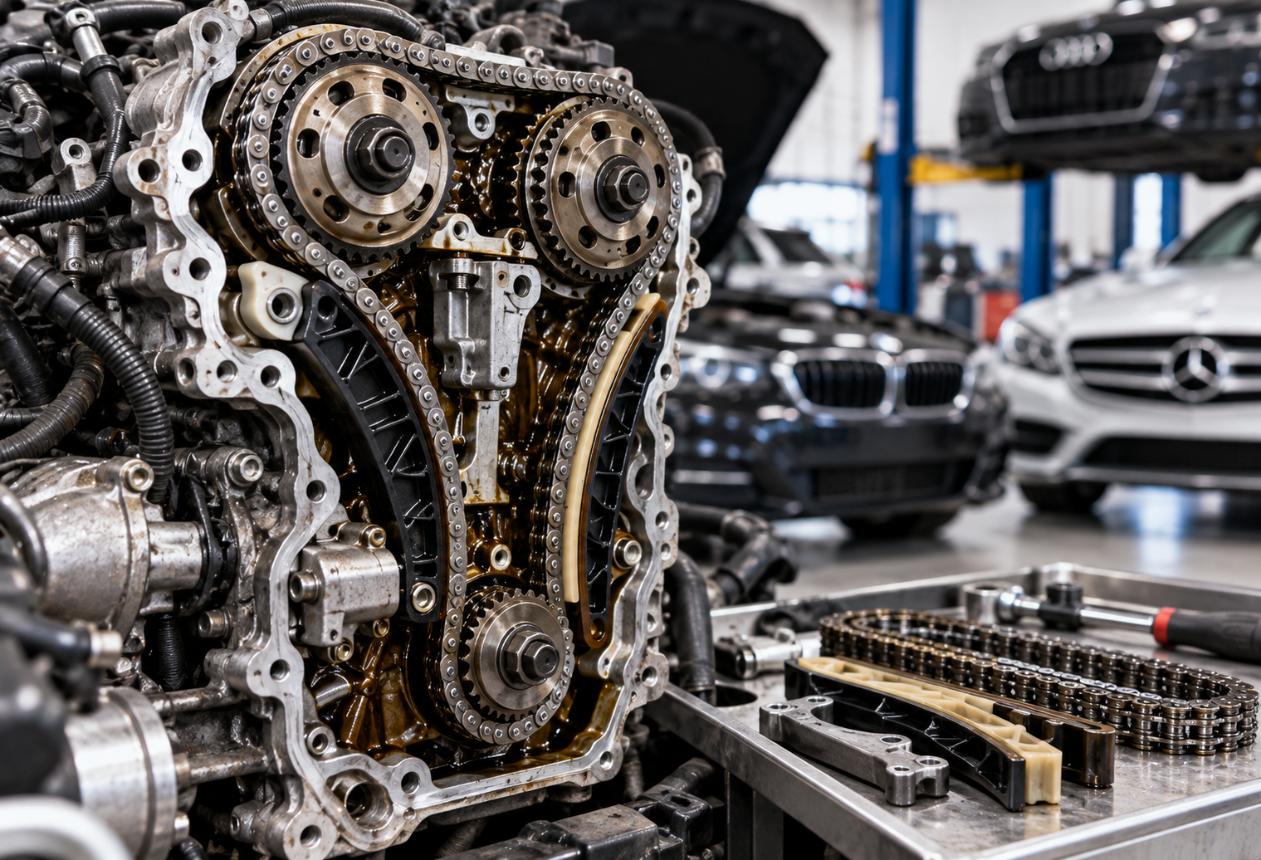
A brief rattling noise when starting your BMW, Mercedes-Benz, Audi, or Volkswagen might seem harmless, especially when the engine runs normally afterward. However, for drivers in Fort Worth, TX, an unusual engine sound can be an early warning of timing chain trouble. With daily commutes, heavy traffic, and prolonged North Texas heat, recognizing engine problems early can help prevent unexpected breakdowns and costly repairs.
Timing chain problems deserve attention because the chain helps synchronize critical engine components. When it wears, loosens, or loses proper tension, engine performance and reliability can suffer.
Quick answer: Timing chain problems in German vehicles commonly produce rattling noises during startup, rough idling, check engine lights, difficulty starting, or reduced engine performance. Worn chain guides, failing tensioners, and improper lubrication can contribute to these symptoms.
Because a loose or damaged timing chain may eventually jump out of position, early diagnosis is essential. The correct repair depends on the vehicle’s engine design, the condition of the timing components, and whether internal engine damage has occurred.
What Fort Worth Drivers Should Know About Timing Chains
A timing chain connects the crankshaft and camshaft or camshafts, helping the engine’s valves open and close at the correct times. Although timing chains are designed for long service life, they are not immune to mechanical wear.
Local German vehicle owners should understand several important points:
-
Not all German engines have the same timing chain design. BMW, Audi, Mercedes-Benz, and Volkswagen use different timing systems depending on the model, engine, and production year.
-
Frequent driving around Fort Worth can affect maintenance needs. Stop-and-go traffic, extended idling, and short trips can increase engine operating hours without adding many miles.
-
North Texas heat makes proper lubrication especially important. High temperatures reinforce the need for manufacturer-approved engine oil and appropriate maintenance intervals.
-
Unusual startup noises should not be ignored. A brief metallic rattle may indicate a tensioner or guide problem, although other engine components can produce similar sounds.
-
Repair costs vary significantly. Engine configuration, component accessibility, and the extent of damage determine the required labor and replacement parts.
Why Timing Chain Problems Matter in Fort Worth
Timing chain problems matter locally because drivers depend on their vehicles for daily commuting across Tarrant County, often in demanding traffic and hot weather.
Whether traveling along I-35W, navigating I-30, or making frequent trips through the West 7th district, a vehicle with an emerging timing chain problem can become unreliable.
Texas heat does not automatically cause timing chain failure. However, high operating temperatures, overdue oil changes, and extended periods of idling can make lubrication-related maintenance particularly important.
At Tim’s German Auto, we encourage drivers to treat unusual engine noises and timing-related warning lights as reasons for professional evaluation rather than waiting for noticeable performance problems.
Local Data and Technical Observations
Timing chain reliability depends more on engine design, maintenance history, and component condition than on a vehicle’s location alone. This distinction matters when evaluating German cars used throughout the Fort Worth area.
Manufacturer service information identifies timing-related concerns on certain engines. For example, BMW has published service guidance addressing timing chain and oil pump drive chain wear in certain N20 and N26 engines.
Some Volkswagen and Audi engines also have documented timing chain, tensioner, or camshaft timing concerns. However, a camshaft-to-crankshaft correlation fault does not automatically prove that the timing chain needs replacement.
These technical differences explain why accurate engine identification and vehicle-specific diagnostics are necessary before recommending repairs.
How Timing Chain Problems Affect Local Drivers
A worn timing chain can affect engine performance, reliability, repair expenses, and the ability to complete everyday trips.
For drivers commuting between Arlington Heights, downtown Fort Worth, and nearby business districts, a timing-related malfunction may create several complications.
Reduced engine performance: Incorrect valve timing can cause hesitation, rough operation, or reduced acceleration.
Unexpected breakdowns: A chain that jumps timing may prevent the engine from starting or cause it to stop running.
Increasing repair expenses: A problem initially limited to guides, tensioners, or the chain may become more expensive if internal components are damaged.
Vehicle downtime: Timing chain repairs can require substantial disassembly, depending on where the chain is located.
Addressing suspicious symptoms early provides a better opportunity to identify the issue before extensive damage occurs.
Warning Signs of Timing Chain Problems in German Cars
Timing chain problems often produce recognizable symptoms, although none of these signs alone confirms a failing chain. Drivers should watch for the following changes.
-
Rattling noises during engine startup. A metallic rattle lasting several seconds after starting may indicate excessive chain movement or a tensioner that is not maintaining proper pressure.
-
A persistent check engine light. Fault codes involving camshaft timing, crankshaft correlation, or variable valve timing may indicate a timing system issue that requires further testing.
-
Rough engine idling. Incorrect valve timing can cause uneven engine operation, shaking, or fluctuating idle speed.
-
Difficulty starting the engine. A timing system that is no longer synchronized properly can interfere with normal startup.
-
Reduced acceleration or engine power. Drivers may notice hesitation, sluggish response, or inconsistent performance.
-
Unusual whining or mechanical noises. Certain timing-related component failures can produce whining or rattling sounds that change with engine speed.
-
Engine misfires. Incorrect valve timing may contribute to misfires, although ignition, fuel delivery, and other problems can cause similar symptoms.
-
An engine that stalls or will not restart. Severe timing problems can prevent normal engine operation and may indicate internal damage.
If these symptoms develop while driving near TCU, Ridglea, or another local neighborhood, avoid assuming the issue will resolve on its own.
When Should You Call a Professional?
Professional timing chain inspection is recommended when a German vehicle develops repeated startup rattles, persistent timing-related fault codes, rough running, or unexplained engine performance problems.
A driver can safely monitor warning lights, note when noises occur, and check the oil level according to the owner’s manual.
However, internal timing components should not be inspected or adjusted without the appropriate knowledge and equipment.
For drivers in Fort Worth, arranging an inspection before another lengthy commute may help prevent an inconvenient roadside breakdown.
Do not continue driving if the engine develops severe metallic rattling, stalls unexpectedly, displays a low oil pressure warning, or runs extremely poorly. Shut it off when safe and arrange professional assistance or towing.
Common Causes of Timing Chain Problems
Timing chain problems generally develop from component wear, tensioning failures, lubrication problems, or engine-specific design vulnerabilities.
Several contributing factors deserve attention in North Texas vehicles.
1. Worn timing chain guides
Timing chain guides help control chain movement. Over time, guide materials can wear, crack, or deteriorate, allowing excessive movement and noise.
2. Failing chain tensioners
A tensioner maintains appropriate chain tension during engine operation. Mechanical wear or oil pressure problems can prevent it from functioning correctly.
3. Inadequate lubrication
Low oil levels, incorrect oil specifications, or neglected maintenance may affect components that depend on proper lubrication.
4. Chain elongation and mechanical wear
Timing chains can develop wear at their joints and contact surfaces. This accumulated wear may affect synchronization between the crankshaft and camshafts.
5. Engine-specific component weaknesses
Certain German engine families have documented issues involving timing components. The appropriate inspection procedure depends on the exact engine code rather than the vehicle brand alone.
Local driving conditions can influence maintenance demands, but they should not be treated as proof of a particular failure.
Prevention and Maintenance for German Cars in North Texas
Preventing avoidable timing system problems starts with correct oil maintenance, attention to engine noises, and inspections appropriate for the specific vehicle.
Drivers throughout Fort Worth should follow several practical maintenance habits:
-
Use engine oil that meets the manufacturer’s required specification.
-
Follow the recommended oil service schedule, accounting for severe-service conditions when applicable.
-
Check the engine oil level regularly, especially before longer summer trips.
-
Investigate new startup rattles rather than repeatedly restarting the engine to reproduce the noise.
-
Address oil pressure or lubrication-related warnings immediately.
-
Have timing-related diagnostic codes evaluated before replacing unrelated sensors or components.
Before summer heat intensifies or holiday travel increases, reviewing the vehicle’s maintenance history can help identify overdue service.
Routine oil changes cannot eliminate every timing chain defect, but proper maintenance supports the components that rely on clean, correctly specified lubrication.
What to Expect From Timing Chain Diagnosis and Repair
A timing chain repair should restore correct mechanical timing and address the components responsible for the problem, provided the engine has not already sustained additional damage.
A professional diagnostic process may include reviewing stored fault codes, checking oil condition and pressure, evaluating startup noises, examining camshaft timing data, and inspecting accessible timing components.
If replacement is necessary, the repair may involve the timing chain, tensioner, guides, seals, and other affected components.
Some German engines require extensive disassembly to access the chain assembly. Others provide relatively more straightforward access.
After repairs, technicians should verify correct timing, reassemble the engine according to manufacturer procedures, and confirm normal operation.
The outcome depends on the engine’s condition before work begins. If the chain has jumped timing, additional testing may be necessary to assess possible internal damage.
Common Mistakes German Car Owners Should Avoid
Mistakes during early symptom recognition can turn a manageable timing system concern into a more complicated repair.
Mistake: Ignoring startup rattles because they disappear.
Consequence: A developing tensioner or guide problem may continue worsening.
Better approach: Document when the noise occurs and schedule an evaluation.
Mistake: Replacing sensors based only on a fault code.
Consequence: The actual mechanical or variable valve timing problem may remain unresolved.
Better approach: Confirm the cause through appropriate testing.
Mistake: Assuming every German vehicle needs timing chain replacement at the same mileage.
Consequence: Owners may authorize unnecessary work or overlook engine-specific problems.
Better approach: Follow manufacturer guidance and evaluate the exact engine.
Mistake: Delaying service during a busy commuting schedule.
Consequence: Symptoms may become more severe during travel along I-35W or the Chisholm Trail Parkway.
Better approach: Arrange an inspection when warning signs first appear.
Common Local Scenario: Startup Rattle During a Fort Worth Commute
A common local scenario involves a German sedan or SUV that develops a brief metallic rattle when started after sitting overnight.
The driver lives near Benbrook and commutes into central Fort Worth. Initially, the engine runs normally after the sound disappears, so the driver assumes the noise is insignificant.
Over time, the sound lasts longer, and a check engine light appears.
These symptoms could involve the timing chain system, but they could also have another mechanical cause.
A proper diagnostic inspection would establish whether the chain, tensioner, guides, oil pressure system, or another component requires attention.
This hypothetical example illustrates why early investigation is preferable to relying on sound alone.
Related Service Solutions for Timing Chain Concerns
Timing chain service solutions typically begin with engine diagnostics and progress to targeted component repair when testing identifies a mechanical problem.
Depending on the findings, relevant services may include:
-
Engine fault code diagnosis and interpretation
-
Investigation of startup rattles and mechanical noises
-
Oil pressure and lubrication system evaluation
-
Camshaft and crankshaft timing checks
-
Timing chain, tensioner, and guide replacement when required
-
Post-repair verification of engine operation
We encourage vehicle owners to understand the diagnostic findings and proposed repair scope before authorizing major engine work.
Concerned about an unusual engine sound?
Comparing Your Timing Chain Repair Options
The right repair option depends on whether symptoms are mild, a mechanical defect has been confirmed, or the engine has already suffered damage.
| Option | When it makes sense | Important consideration |
|---|---|---|
| Diagnostic inspection | New rattles, warning lights, or rough running | Confirms whether the timing system is involved |
| Maintenance service | Overdue oil service without confirmed chain damage | Supports lubrication but cannot repair worn mechanical parts |
| Timing component replacement | Confirmed chain, guide, or tensioner failure | May require substantial labor and specialized tools |
| Major engine repair or replacement | Internal damage after a timing failure | Requires evaluating repair costs against vehicle condition and value |
A tensioner-only repair is not always sufficient. If the chain and guides are also worn, replacing only one component may leave the underlying problem unresolved.
For older German vehicles, the decision should also account for overall mechanical condition, mileage, and future ownership plans.
Service Areas Around Fort Worth
Timing chain concerns can affect German vehicle owners throughout Fort Worth and surrounding Tarrant County communities, including Benbrook, North Richland Hills, and nearby residential and commercial areas.
Drivers traveling between these communities should prioritize accurate diagnosis when new engine noises, warning lights, or performance changes develop.
The Cost of Ignoring Timing Chain Problems
Ignoring a failing timing chain can increase the risk of engine damage, unexpected breakdowns, and higher repair costs.
In some engines, a chain that jumps out of synchronization can allow pistons and valves to contact each other. This may result in bent valves or other serious internal damage.
Not every timing chain concern progresses to engine failure. However, because the potential consequences can be substantial, continued driving with significant symptoms is an unnecessary risk.
For commuters who rely on their vehicles every day, timely diagnosis can also help reduce the inconvenience of an unexpected breakdown.
Reduce the risk of further engine damage.
Frequently Asked Questions About German Car Timing Chains
Timing chain questions often focus on warning signs, repair urgency, replacement costs, and whether local driving conditions contribute to mechanical wear. The following answers address common concerns for German vehicle owners throughout the Fort Worth area.
1. How do I know if my BMW has a timing chain problem?
A BMW with timing chain trouble may produce startup rattling, whining noises, rough running, or timing-related fault codes. Certain BMW engines have documented timing component concerns, but symptoms alone are not enough to identify the problem. A professional inspection can determine whether the chain assembly or another component is responsible.
2. Does Fort Worth heat cause timing chains to fail faster?
Fort Worth heat does not automatically cause timing chain failure. However, hot-weather driving places demands on engine cooling and lubrication systems. Using the correct oil, maintaining proper oil levels, and following appropriate service intervals help protect engine components. Timing chain condition still depends heavily on engine design, wear, and maintenance history.
3. Can I drive my Mercedes-Benz with a rattling timing chain?
Driving with a suspected rattling timing chain is not recommended until the source of the noise is identified. Some rattles have less serious causes, but a failing chain or tensioner can create significant engine risks. If rattling is severe, persistent, or accompanied by poor engine operation, arrange towing rather than continuing to drive.
4. Are Audi and Volkswagen timing chain problems common in Tarrant County?
Audi and Volkswagen timing chain concerns are associated with particular engine designs and production periods, not with Tarrant County itself. Some engines have known tensioner or timing-related issues, while others may operate reliably for many years. Vehicle-specific maintenance records and diagnostic findings provide better guidance than general assumptions about the brand.
5. How much does timing chain replacement cost in Fort Worth?
Timing chain replacement costs vary according to the German vehicle’s engine design, labor requirements, replacement parts, and any related damage. Engines with difficult-to-access timing components generally require more labor. An accurate estimate should follow diagnosis and identification of the necessary repair, rather than relying on a single price for every model.
6. Can stop-and-go traffic near downtown affect timing chain wear?
Stop-and-go traffic can increase engine operating time relative to the mileage shown on the odometer. For drivers commuting near downtown, West 7th, and surrounding business districts, maintenance based only on mileage may not always reflect operating conditions. Following the manufacturer’s severe-service guidance, where applicable, can help address these demands.
7. Is a timing chain supposed to last the life of a German engine?
Many timing chains are designed for long service life, and some manufacturers do not specify a routine replacement interval. However, this does not mean every chain will last indefinitely. Component quality, lubrication, engine design, and accumulated wear influence longevity. Replacement should follow manufacturer instructions or a confirmed mechanical need.
8. Should I repair my older German car or replace the engine?
Repairing an older German car may be reasonable when timing chain damage is limited and the rest of the engine remains healthy. Engine replacement becomes a consideration if a failed chain has caused extensive internal damage. Compare written repair estimates, overall vehicle condition, and long-term ownership plans before deciding.
Protect Your German Car With Timely Engine Care
Protecting your German car from serious timing system problems begins with recognizing warning signs and addressing them before they become more severe.
A startup rattle, persistent warning light, or noticeable change in engine performance deserves attention, particularly when your vehicle is essential for daily travel across North Texas.
We believe informed maintenance decisions start with understanding what your engine needs and why a particular repair is recommended.
Keep your German vehicle reliable on Fort Worth roads.
Get answers about unusual engine noises, timing-related concerns, and appropriate next steps.