Why Is Your BMW, Audi, or Mercedes-Benz Overheating Even After a Coolant Service?
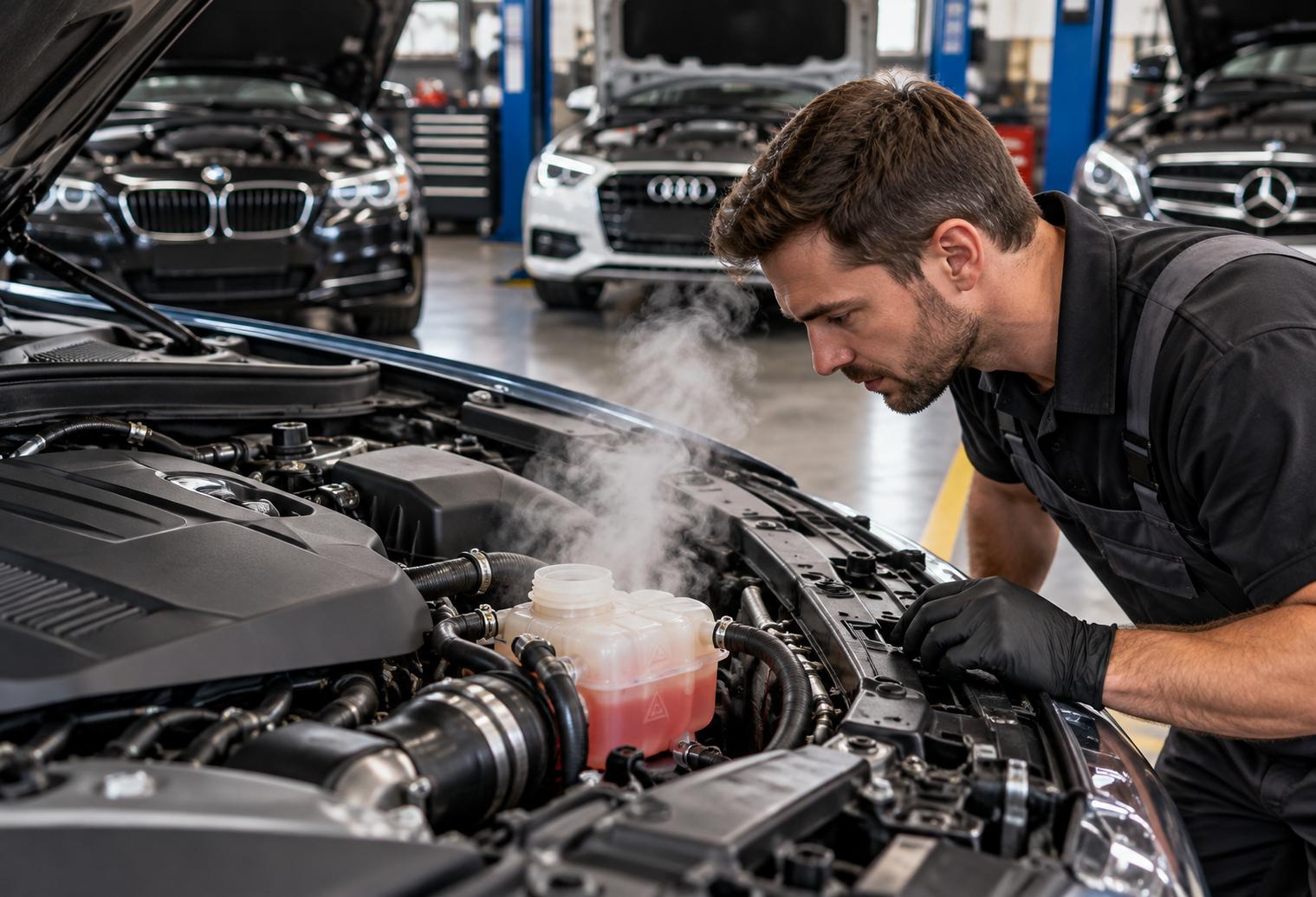
You just had your coolant serviced, but your BMW, Audi, or Mercedes-Benz is still running hot. For drivers in Fort Worth, TX, this can be especially frustrating during summer heat or stop-and-go traffic. A fresh coolant service should help maintain proper engine temperatures, but it cannot fix every cooling system problem.
Quick Answer: Your BMW, Audi, or Mercedes-Benz may still overheat after a coolant service because of trapped air, a failing water pump, a malfunctioning thermostat, a coolant leak, or a radiator or cooling fan problem. An incorrect coolant mixture or an incomplete bleeding procedure may also contribute. These vehicles have model-specific cooling systems that require proper filling, testing, and diagnosis. If overheating continues, the underlying problem needs to be identified before further driving causes engine damage.
What Fort Worth Drivers Should Know About Recurring Overheating
Recurring overheating after a coolant service generally means the cooling system still has a circulation, pressure, airflow, or coolant-level problem. German vehicles may require specific bleeding procedures and manufacturer-approved coolant, so simply replacing the fluid does not always resolve the condition.
-
Trapped air can interrupt coolant circulation. Some BMW, Audi, and Mercedes-Benz models require specific bleeding or vacuum-filling procedures.
-
North Texas summer temperatures increase cooling demands. Heavy traffic on I-35W or Loop 820 can expose problems with radiator airflow or cooling fan operation.
-
A coolant service does not repair failing components. Water pumps, thermostats, expansion tanks, hoses, and radiators can still malfunction.
-
Repeated overheating deserves immediate attention. Continuing to drive with an overheating engine can lead to expensive internal engine damage.
Why Overheating Matters in Fort Worth
Overheating is particularly concerning in Fort Worth because high summer temperatures and frequent stop-and-go driving can place sustained demands on a vehicle’s cooling system. A minor cooling problem may become more noticeable while idling in traffic, running the air conditioning, or traveling during the hottest part of the afternoon.
Drivers commuting through Arlington Heights, West 7th, and other busy areas may notice rising engine temperatures when their vehicles spend extended periods moving slowly.
At Tim’s German Auto, we encourage drivers to investigate recurring overheating instead of assuming another coolant top-off will solve the problem.
Local Climate Data and Cooling System Performance
Local climate data confirms that German vehicles in Fort Worth regularly operate in demanding summer conditions. According to the National Weather Service, the Fort Worth weather station’s 1991-2020 climate normals show average daily high temperatures of approximately 94°F in both July and August.
These temperatures do not automatically cause a properly functioning vehicle to overheat. However, they can expose cooling system weaknesses that might be less noticeable during cooler weather.
An aging water pump, restricted radiator, or malfunctioning fan may struggle to maintain proper operating temperatures when additional heat and traffic conditions increase the cooling system’s workload.
How Recurring Overheating Affects Local Drivers
Recurring overheating can affect engine reliability, daily transportation, and repair costs for drivers throughout Tarrant County. What begins as an occasional temperature warning may progress into a breakdown if the cause is not corrected.
Excessive engine temperatures can damage seals, gaskets, and other engine components. Severe overheating can also distort engine components, potentially resulting in major repairs.
Addressing the problem early helps reduce the risk of unexpected downtime during work commutes, family trips, and daily errands.
Warning Signs Your German Vehicle Still Has a Cooling System Problem
Warning signs of an unresolved cooling system problem include rising engine temperatures, coolant loss, inconsistent cabin heat, and visible leaks. These symptoms can appear immediately after service or develop during subsequent drives.
Watch for these indicators:
-
Temperature warnings: The instrument cluster displays an overheating message or an unusually high coolant temperature.
-
Low coolant warnings: The coolant level drops again after being filled and properly checked.
-
Coolant puddles: You notice colored or clear-looking fluid beneath the vehicle that may be coolant.
-
Sweet odors: A sweet smell around the engine compartment may indicate escaping coolant.
-
Weak cabin heat: The heater blows cool air despite the engine being warm, potentially indicating low coolant or trapped air.
-
Overheating during idle: Engine temperatures rise in traffic near the Near Southside but improve once the vehicle starts moving.
-
Steam from the engine compartment: Visible steam may indicate a significant coolant leak or overheating condition.
Any severe temperature warning, steam, or rapid temperature increase should be treated as an urgent problem.
When Should You Call a Professional?
You should seek professional cooling system diagnostics whenever your BMW, Audi, or Mercedes-Benz continues overheating after a coolant service. Repeated warnings, visible coolant loss, or temperatures rising above the normal operating range suggest that additional testing is necessary.
If your vehicle overheats while driving, pull over safely, shut off the engine, and allow it to cool.
Never remove the coolant reservoir cap while the cooling system is hot or pressurized. Escaping coolant and steam can cause serious burns.
Once the engine has cooled completely, you may visually inspect the coolant level using the manufacturer’s instructions. However, do not continue driving a vehicle that is actively overheating. Arrange professional assistance or towing when necessary.
Common Causes of Overheating After a Coolant Service
The most common possibilities to investigate after a coolant service are trapped air, coolant leaks, poor coolant circulation, thermostat problems, and inadequate radiator airflow. The correct diagnosis depends on the vehicle’s model, engine, symptoms, and the work that was performed.
1. Air Trapped Inside the Cooling System
Air pockets can remain inside cooling passages when a system is refilled without following the correct bleeding procedure.
Trapped air may interrupt coolant flow and create localized hot spots.
Some BMW models use an electronically controlled bleeding routine, while certain Audi and Mercedes-Benz systems have different filling and bleeding requirements. The procedure must match the vehicle.
2. A Failing Water Pump
The water pump circulates coolant through the engine and cooling system.
If it cannot maintain adequate flow, replacing the coolant will not solve the overheating problem.
Depending on the model, German vehicles may use mechanically driven or electrically operated water pumps. A failing pump may cause overheating even when the reservoir contains the correct amount of coolant.
3. A Sticking Thermostat
A thermostat that fails to open correctly can restrict coolant circulation through the radiator.
This may cause engine temperatures to rise during a drive through Fort Worth, particularly when the engine is working harder.
Some vehicles also use electronically controlled thermostats, making diagnostic testing important before replacement.
4. Cooling Fan or Radiator Problems
Cooling fans help move air through the radiator when a vehicle is stopped or traveling slowly.
A faulty fan, control circuit, or restricted radiator can contribute to overheating in summer traffic.
If your vehicle gets hot while idling but cools down when moving, a fan or airflow problem is one possibility worth investigating.
5. Coolant Leaks or Pressure Loss
A damaged hose, expansion tank, radiator, water pump seal, or pressure cap can allow coolant or system pressure to escape.
Even small leaks can eventually reduce cooling performance.
Pressure testing can help locate leaks that are not obvious during a basic visual inspection.
6. Incorrect Coolant or Mixture
BMW, Audi, and Mercedes-Benz vehicles have specific coolant requirements that can vary by model and year.
Using incompatible coolant or an incorrect mixture can affect corrosion protection, cooling performance, and component longevity.
Coolant color alone is not a reliable way to confirm compatibility.
Prevention and Maintenance for North Texas Drivers
Preventing recurring overheating starts with regular cooling system inspections, proper coolant selection, and promptly addressing leaks or temperature warnings. In North Texas, it is especially helpful to assess cooling system performance before peak summer temperatures arrive.
Useful maintenance steps include:
-
Check the coolant level only when the engine is completely cool, following the owner’s manual.
-
Watch for changes in temperature readings or coolant warning messages.
-
Inspect accessible hoses and the area beneath the parked vehicle for signs of leakage.
-
Use coolant that meets the manufacturer’s specifications.
-
Have the cooling system inspected before summer travel if the vehicle has a history of overheating.
-
Confirm that the correct filling and bleeding procedure was completed after cooling system repairs.
Avoid opening hot cooling systems or attempting unfamiliar bleeding procedures without the proper equipment and model-specific instructions.
What Results Should You Expect After Proper Repairs?
Proper cooling system repairs should restore stable temperature control and eliminate the specific overheating condition that was diagnosed. The results depend on whether the issue involves trapped air, a leak, a failed component, or more than one problem.
After repairs, a technician may verify coolant levels, check for leaks, evaluate component operation, and confirm temperature performance under appropriate operating conditions.
A successful repair should address the cause rather than temporarily hide the warning signs.
Common Mistakes After a Coolant Service
Common mistakes include repeatedly adding coolant, assuming every overheating problem requires another flush, and continuing to drive after temperature warnings appear. These approaches can delay the correct repair and increase the risk of engine damage.
Mistake 1: Repeatedly topping off coolant
-
Consequence: An unresolved leak or trapped-air problem remains.
-
Better approach: Identify why the coolant level is changing and test the system for leaks.
Mistake 2: Replacing the thermostat without testing
-
Consequence: The vehicle may continue overheating if the actual problem is a water pump, cooling fan, or another component.
-
Better approach: Diagnose circulation and temperature-control performance before selecting replacement parts.
Mistake 3: Ignoring overheating during short trips
-
Consequence: Even a short drive through Tarrant County can expose an already overheated engine to additional damage.
-
Better approach: Stop driving when the vehicle overheats and arrange an appropriate inspection.
A Common Local Overheating Scenario
A common Fort Worth scenario involves a driver whose Audi recently received a coolant flush. The vehicle seems normal during a short morning drive, but the temperature warning appears while sitting in afternoon traffic near West 7th.
The driver assumes the coolant needs time to circulate.
However, a proper coolant service should not require driving through repeated overheating episodes.
The cause could be trapped air, a fan malfunction, or an existing circulation problem that the coolant service did not correct.
This is a hypothetical example, but it illustrates why the conditions under which overheating occurs are important diagnostic clues.
Cooling System Services That Can Solve the Problem
Cooling system diagnostic services can identify why your German vehicle continues overheating and determine whether it needs a proper bleeding procedure, component repair, or leak correction.
Depending on the symptoms, we can evaluate the need for:
-
Cooling system pressure testing
-
Coolant leak inspections
-
Water pump and thermostat testing
-
Radiator and cooling fan evaluation
-
Model-specific coolant filling and bleeding
-
Electronic fault-code and temperature-data diagnostics
-
Cooling system component replacement when indicated
The goal is to identify the actual fault instead of replacing parts unnecessarily.
Comparing Your Cooling System Repair Options
The appropriate repair option depends on whether the overheating results from a simple coolant-level issue, trapped air, or a failed mechanical or electronic component.
| Option | When It Makes Sense | Important Consideration |
|---|---|---|
| Coolant level check | Routine maintenance with a completely cool engine | Does not identify every hidden leak |
| Proper system bleeding | Air remains after coolant service | Must follow model-specific procedures |
| Component repair | Testing confirms a failed pump, thermostat, fan, or other part | Addresses a diagnosed mechanical or electrical fault |
| Comprehensive diagnostics | Overheating continues or the cause is unclear | Helps avoid unnecessary repeat services |
Professional testing becomes especially valuable when multiple components could produce similar symptoms.
German Auto Overheating Concerns in Fort Worth and Nearby Areas
Drivers in Fort Worth and nearby communities such as Benbrook and North Richland Hills experience many of the same North Texas driving conditions. High summer temperatures, commuter traffic, and extended periods of idling can make existing cooling problems more noticeable.
Whether your BMW, Audi, or Mercedes-Benz overheats during city driving or longer trips, understanding when the warning occurs helps narrow down the cause.
The Cost of Ignoring an Overheating Engine
Ignoring repeated overheating can turn a manageable cooling system repair into significant engine damage. A defective pump, thermostat, or leaking hose may be less costly to address before excessive engine temperatures cause additional failures.
Severe overheating can damage head gaskets, cylinder heads, and other internal components.
Repair costs vary by vehicle and failure, but early diagnosis offers an opportunity to correct the problem before damage spreads.
Frequently Asked Questions About German Vehicle Overheating
These common questions address why German vehicles can overheat after coolant service and how local driving conditions affect the symptoms. A fresh coolant flush does not eliminate the possibility of trapped air, component failure, or pressure loss, so the next step should match the symptoms.
Why is my BMW overheating after a coolant flush in Fort Worth?
Your BMW may be overheating because air remains trapped in the cooling system, the water pump is failing, or the thermostat is not regulating temperature correctly. Some BMW engines require a specific electronic bleeding procedure. If the warning continues after service, further diagnostic testing is needed before driving.
Can trapped air cause my Audi to overheat after coolant replacement?
Yes, trapped air can cause an Audi to overheat by interrupting coolant circulation and creating uneven temperatures. Depending on the model, the cooling system may require a specific bleeding or vacuum-filling process. A technician should confirm the correct procedure and inspect for other faults if overheating persists.
Why does my Mercedes-Benz overheat in Loop 820 traffic but not on the highway?
Overheating primarily in slow traffic can indicate inadequate airflow through the radiator, potentially caused by a malfunctioning cooling fan or related controls. Other cooling system problems can create similar symptoms. Because airflow increases at higher speeds, professional testing should examine fan operation, circulation, and engine temperature data.
Can North Texas summer heat make a healthy BMW or Audi overheat?
Summer heat increases the demands on a vehicle’s cooling system, but a properly functioning BMW or Audi should be designed to operate within its specified temperature range under normal conditions. Repeated overheating during hot weather suggests that the cooling system may have an underlying fault that needs attention.
Is it safe to drive my overheating Mercedes-Benz from Benbrook to a repair shop?
No, you should not continue driving a Mercedes-Benz that is actively overheating, even for a relatively short trip. Continuing to operate the engine can cause severe damage. Pull over safely, turn off the engine, allow it to cool, and arrange towing or appropriate roadside assistance if overheating has occurred.
Should I add more coolant if my German car still runs hot?
Adding coolant may be appropriate only if the engine is completely cool, the level is low, and you are following the manufacturer’s instructions. However, repeatedly adding coolant without identifying the cause can conceal a leak. If an overheating warning is present, topping off coolant does not make continued driving safe.
How can a mechanic determine why my Audi or BMW keeps overheating?
A mechanic can investigate recurring overheating by checking coolant levels, testing system pressure, reading electronic fault codes, examining temperature data, and evaluating circulation and fan operation. The technician should also confirm whether the proper bleeding procedure was completed. These tests help distinguish a filling problem from a failing component.
Should Tarrant County drivers schedule cooling system inspections before summer?
Yes, inspecting a cooling system before the hottest months can help identify aging hoses, coolant leaks, and other weaknesses before they become more disruptive. This is particularly useful for vehicles with previous overheating problems. Maintenance cannot prevent every failure, but it can help reduce avoidable breakdown risks.
Keep Your BMW, Audi, or Mercedes-Benz Running Reliably
Recurring overheating after a coolant service is a sign that something still needs attention. Whether the cause is trapped air, a defective thermostat, a failing water pump, or another cooling system concern, accurate diagnostics can help prevent unnecessary repairs and further engine damage.
For local German vehicle owners, addressing the problem promptly is an important part of protecting engine performance and long-term reliability.
Protect Your German Vehicle From Overheating in Fort Worth
Proper overheating diagnostics help identify unresolved cooling system problems before they lead to more serious engine damage.
At our shop, we focus on helping you understand the problem and determine the appropriate next step for your vehicle.