OEM vs. Aftermarket Parts: What Fort Worth German Car Owners Should Know
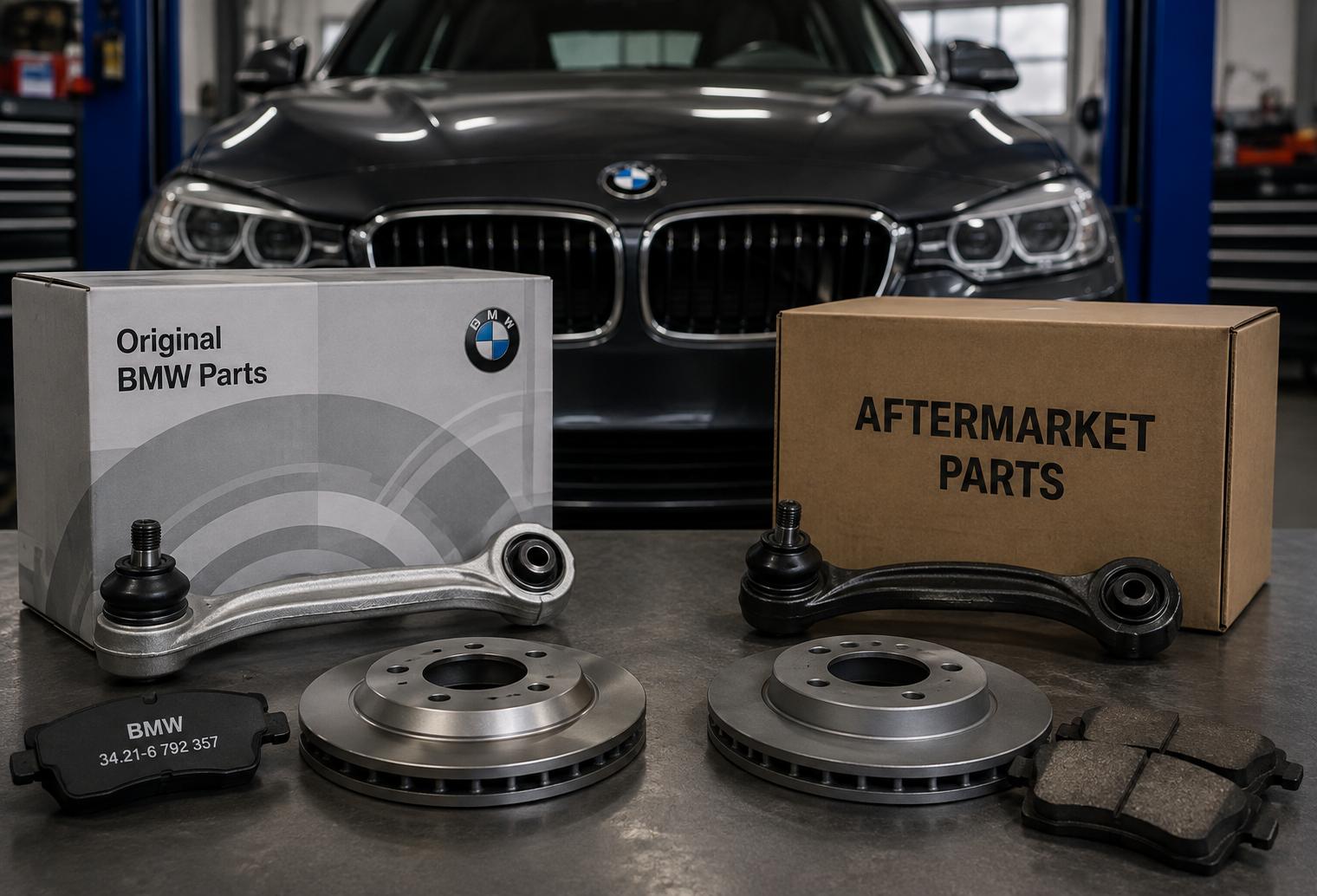
Owning a German vehicle in Fort Worth means dealing with driving conditions that can put plenty of demand on its components. Summer heat, stop-and-go traffic, highway miles, and daily trips across Tarrant County can all contribute to wear. When a repair becomes necessary, one of the first decisions you may face is whether to use OEM or aftermarket parts.
Quick answer: OEM parts are made by or for the vehicle manufacturer to meet its specifications, while aftermarket parts are produced by other companies for compatible vehicles. Neither category is automatically the right choice for every German car repair. The better option depends on the specific component, the quality of the manufacturer, vehicle age, repair goals, availability, and cost.
What Fort Worth German car owners should know
-
OEM parts can be a straightforward choice when maintaining factory specifications and fit is a priority.
-
Quality aftermarket parts can provide a practical alternative for certain repairs, but quality varies significantly between manufacturers.
-
North Texas heat can make the quality of cooling, electrical, rubber, and plastic components especially relevant.
-
Drivers traveling regularly on I-30, I-35W, Loop 820, or Chisholm Trail Parkway may accumulate substantial mileage, making long-term part quality worth considering.
-
The lowest-priced part is not necessarily the lowest-cost choice once labor, service life, and the possibility of repeating a repair are considered.
Why Do OEM vs. Aftermarket Parts Matter in Fort Worth?
OEM vs. aftermarket parts matter in Fort Worth because the component you choose can affect fit, repair cost, service life, and how closely the vehicle remains aligned with its original specifications. German vehicles often use tightly integrated mechanical and electronic systems, so part selection should be based on the repair rather than price alone.
North Texas driving adds another consideration. High summer temperatures can be demanding on cooling systems, hoses, seals, electronics, batteries, and other heat-sensitive components. Heavy traffic between downtown, the Cultural District, Arlington, and surrounding Tarrant County communities can also mean extended periods of idling and stop-and-go operation.
Tim’s German Auto helps local German car owners evaluate repair options based on the vehicle, the component involved, and the driver’s priorities. We believe the useful question is not simply whether OEM or aftermarket is better. It is which part makes sense for this particular repair.
What Do Local Driving Conditions Tell Us About Part Selection?
Local driving conditions suggest that part quality should be considered alongside price, especially for components exposed to heat, vibration, repeated cycling, or demanding mileage. Fort Worth’s hot summers and a mix of urban traffic and highway driving can make durability particularly important for certain German vehicle systems.
Rather than assuming one category is always superior, we look at how and where the component operates. Cooling-system parts face different demands than interior trim. A sensor requires different considerations than a suspension component.
A German vehicle commuting between Fort Worth and Dallas may also have different needs than a lightly driven car used primarily around neighborhoods such as Tanglewood, Ridglea Hills, or Westover Hills. Mileage, vehicle age, maintenance history, and expected ownership period all help shape the decision.
How Can Part Choice Affect a German Car Locally?
Part choice can affect repair reliability, vehicle performance, future maintenance costs, and the likelihood that the repair will need to be revisited. For local owners who depend on their vehicles for daily commuting throughout Tarrant County, those differences can matter well beyond the initial repair bill.
A less expensive component may appear attractive initially. However, if its fit, materials, or construction are unsuitable for the application, replacing it again can mean paying for additional labor and dealing with more vehicle downtime.
That does not mean every aftermarket component is inferior. The aftermarket includes products across a broad range of quality levels. Some components may be sensible alternatives to OEM parts, while others may not offer the characteristics we want for a particular application.
The repair should drive the parts decision.
What Warning Signs May Mean Your German Car Needs a Part Replaced?
Warning signs that a German vehicle may need a component replaced include new noises, warning lights, fluid leaks, temperature changes, vibration, unusual handling, and declining performance. These symptoms do not identify whether an OEM or aftermarket replacement is appropriate, but they are reasons to have the vehicle properly diagnosed.
Watch for:
-
A new dashboard warning or check-engine light.
-
Coolant, oil, or another fluid appearing beneath the vehicle.
-
Engine temperatures behaving differently than normal.
-
New rattling, knocking, squeaking, or grinding sounds.
-
Steering or suspension that feels loose, harsh, or inconsistent.
-
Rough running, hesitation, reduced power, or difficult starting.
-
Electrical accessories operating intermittently.
-
A recently replaced component developing the same symptoms again.
With German vehicles, replacing a part based only on a symptom can be an expensive mistake. Proper diagnosis should come first.
When Should You Call a German Auto Repair Professional?
You should call a German auto repair professional when a warning light, leak, overheating condition, drivability problem, unusual noise, or safety-related issue requires diagnosis before parts are selected. Owners can monitor basic symptoms, but determining which component failed and why often requires specialized diagnostic knowledge and equipment.
Checking fluid levels, watching gauges, and noting when a symptom occurs can provide useful information. Continuing to drive through overheating, serious leaks, brake problems, or significant changes in steering and handling is different.
For German cars around Fort Worth, diagnosis is particularly important before buying an expensive component. A fault code or visible symptom may point toward a system without proving that a particular part has failed.
What Common Factors Determine Whether OEM or Aftermarket Is Better?
The best choice between OEM and aftermarket parts usually depends on component quality, application, vehicle age, availability, repair goals, and total cost. For German vehicles, we also consider how closely a replacement needs to match factory characteristics and how important the component is to vehicle operation.
Common factors include:
-
Component function: Engine-management, cooling, braking, suspension, and electronic components may warrant different standards than cosmetic pieces.
-
Manufacturer quality: Aftermarket is a category, not a single quality level. Two parts sold for the same application can differ in materials, manufacturing, and fit.
-
Vehicle age: An older German vehicle may have different repair priorities than a newer car whose owner wants to maintain factory specifications as closely as possible.
-
Availability: Sometimes the preferred component is not immediately available, which can affect repair timing.
-
Local driving: Frequent highway commuting, summer traffic, and high temperatures can make durability especially relevant.
-
Repair labor: If accessing a component requires substantial labor, saving a small amount on the part may make less sense if there is concern about its longevity.
How Can Fort Worth Drivers Reduce Premature Parts Wear?
Fort Worth drivers can reduce premature parts wear by keeping up with inspections, addressing leaks and warning signs early, maintaining fluids appropriately, and paying special attention to heat-sensitive systems before peak summer conditions. Preventive maintenance cannot eliminate failures, but it can help identify deteriorating components before they create larger problems.
Before the hottest months, consider having cooling-system condition, hoses, belts, fluids, and other relevant components checked as part of routine maintenance. Tires, suspension, and brakes also deserve attention for vehicles accumulating substantial Metroplex mileage.
Owners can safely monitor fluid levels, tire condition, dashboard messages, and changes in vehicle behavior. Diagnosis, internal repairs, and work involving safety-critical or complex electronic systems are better left to qualified professionals.
What Results Should You Expect From the Right Replacement Part?
The right replacement part should restore the intended function of the failed component while fitting the repair goals of the vehicle and owner. Whether that means OEM or a carefully selected aftermarket option depends on the application, so owners should expect a recommendation based on more than the brand name printed on the box.
A successful repair starts with an accurate diagnosis. From there, the component should be selected with fit, function, quality, availability, and cost in mind.
For some repairs, staying with OEM may be the preferred route. For others, a reputable aftermarket alternative may accomplish the repair goal without unnecessary expense.
What Mistakes Should German Car Owners Avoid When Buying Parts?
German car owners should avoid choosing replacement parts solely by price, assuming all aftermarket products are equivalent, or ordering components before the underlying problem has been diagnosed. These mistakes can turn what looks like a savings into extra labor, delays, or a repeated repair.
Mistake: Buying the cheapest compatible listing.
Consequence: Compatibility on paper does not necessarily tell you everything about fit or quality.
Better approach: Evaluate the actual manufacturer and application.
Mistake: Assuming OEM is required for every repair.
Consequence: You may overlook a suitable alternative for a less critical application.
Better approach: Compare options based on the specific component.
Mistake: Assuming aftermarket always means cheaper and worse.
Consequence: You treat a huge category of manufacturers as though they offer identical products.
Better approach: Judge parts individually.
Mistake: Ordering before diagnosis.
Consequence: You may replace a functioning component while the actual fault remains.
Better approach: Diagnose first, then select the replacement.
What Is a Common Local Parts Scenario?
A common local scenario is a German car owner facing a repair on a daily-driven vehicle and trying to decide whether paying more for an OEM component is worthwhile. The right answer may change depending on the part, the vehicle’s age, and how long the owner plans to keep the car.
Imagine a vehicle that regularly travels I-30 or I-35W and accumulates substantial commuting miles. For a labor-intensive or operationally important repair, component quality may carry more weight because repeating the job would mean additional labor and downtime.
For a different component on an older vehicle, a reputable aftermarket option might be more practical.
This is why a parts recommendation should follow diagnosis rather than a blanket OEM-only or aftermarket-only rule.
Which Repair Services Can Help With Parts Decisions?
Professional German auto repair services can help identify the failed component, determine why it failed, and select an appropriate replacement based on the vehicle and repair. Diagnostics, routine maintenance, cooling-system service, suspension work, brake repairs, electrical diagnosis, and other mechanical repairs can all involve decisions about replacement components.
We can discuss the available options when a repair requires a new part and explain the considerations behind the recommendation.
How Do OEM and Aftermarket Parts Compare?
OEM parts generally prioritize matching the vehicle manufacturer’s specifications, while aftermarket parts provide a broader range of brands, prices, and quality levels. Neither choice should be made automatically, especially on a German vehicle where component function and system integration can influence the repair.
| Factor | OEM Parts | Aftermarket Parts |
|---|---|---|
| Source | Made by or for the vehicle manufacturer | Produced by independent manufacturers |
| Fit and specification | Designed around factory requirements | Varies by manufacturer and product |
| Selection | Usually narrower | Often broader |
| Price | Can be higher | Can range widely |
| Quality | Intended to meet manufacturer specifications | Can range from economy to high quality |
| Best use | Application dependent | Application dependent |
The most useful comparison is between the specific OEM part and the specific aftermarket alternative being considered.
Where Do We Help German Car Owners in the Fort Worth Area?
We serve German car owners in Fort Worth and the surrounding area who need help diagnosing vehicle problems and choosing appropriate repair solutions. Drivers from nearby Tarrant County communities and areas such as Arlington, Benbrook, and Westover Hills can face the same North Texas heat and demanding Metroplex driving conditions.
Part selection should reflect both the vehicle and how it is actually used.
What Can Happen If You Delay a Needed Parts Repair?
Delaying a needed repair can allow the original problem to worsen, affect connected components, increase vehicle downtime, or create a safety concern depending on the failed system. Fort Worth heat can make postponing cooling-related problems especially risky because an existing weakness may become more noticeable during high-temperature driving.
Not every worn component creates an emergency. The key is understanding what has failed and the consequences of waiting.
A professional diagnosis can help distinguish a repair that can be planned from a problem that should be addressed promptly.
FAQ About OEM and Aftermarket German Car Parts
Are OEM parts always better for German cars in Fort Worth?
No, OEM parts are not automatically better for every German car repair in Fort Worth. OEM can be an excellent choice when factory specifications are a priority, but a quality aftermarket component may be appropriate in other applications. The specific part, manufacturer, vehicle age, repair labor, and driving needs should guide the decision.
Are aftermarket German car parts reliable?
Some aftermarket German car parts can be reliable, but quality varies significantly between manufacturers and product lines. That variation is why the word “aftermarket” alone does not tell you whether a component is a good choice. Evaluate the manufacturer, application, construction, and repair requirements before making a decision.
Do North Texas temperatures affect which parts I should choose?
North Texas temperatures can make component quality particularly relevant for parts exposed to sustained heat and repeated thermal cycling. Cooling-system components, seals, hoses, plastics, electrical components, and other heat-sensitive items may face demanding summer conditions, so choosing solely on initial price can overlook an important part of the repair decision.
Should I use OEM parts on an older German car in Tarrant County?
OEM parts can still make sense on an older German car in Tarrant County, but vehicle age alone should not determine the choice. Consider the component, condition of the vehicle, expected ownership period, repair labor, part availability, and quality of available aftermarket alternatives before deciding.
Can I buy my own parts before bringing my German car in for repair?
Buying parts before diagnosis can create problems because the suspected component may not be the actual cause of the symptom. German vehicle systems can produce similar symptoms from different faults. Having the problem properly diagnosed first can reduce the risk of purchasing a part that does not solve the underlying issue.
Does driving on I-30 or I-35W affect parts wear?
Frequent highway driving can contribute to mileage-related wear, while congestion can add periods of idling, braking, acceleration, and heat exposure. Drivers regularly using I-30, I-35W, Loop 820, and other Metroplex routes should base maintenance decisions on actual mileage and vehicle condition rather than relying only on calendar intervals.
Is an aftermarket part worth using if it saves money?
An aftermarket part may be worthwhile when it is a suitable, quality component for the application and provides good overall value. Initial price should not be the only consideration. Labor, expected service life, fit, vehicle age, and the consequences of another failure should also factor into the decision.
How do I know which part is right for my German vehicle?
The right part is identified by combining accurate vehicle information, proper diagnosis, component requirements, and the quality of available replacement options. Rather than assuming OEM or aftermarket is universally best, ask why a particular component is being recommended and how that choice fits your vehicle and repair goals.
Make the Right Parts Decision for Your German Car
Choosing between OEM and aftermarket parts does not have to mean picking a side. For German car owners around Fort Worth, the better approach is to diagnose the problem correctly and choose a quality component that fits the vehicle, repair, and driving demands.
We can help you understand the repair and the available parts options before the work moves forward.
Get Your German Car Repair Done With the Right Parts for the Job
Get clear guidance based on your vehicle and the repair it actually needs.