When Should You Replace the Belts and Hoses on a German Vehicle?
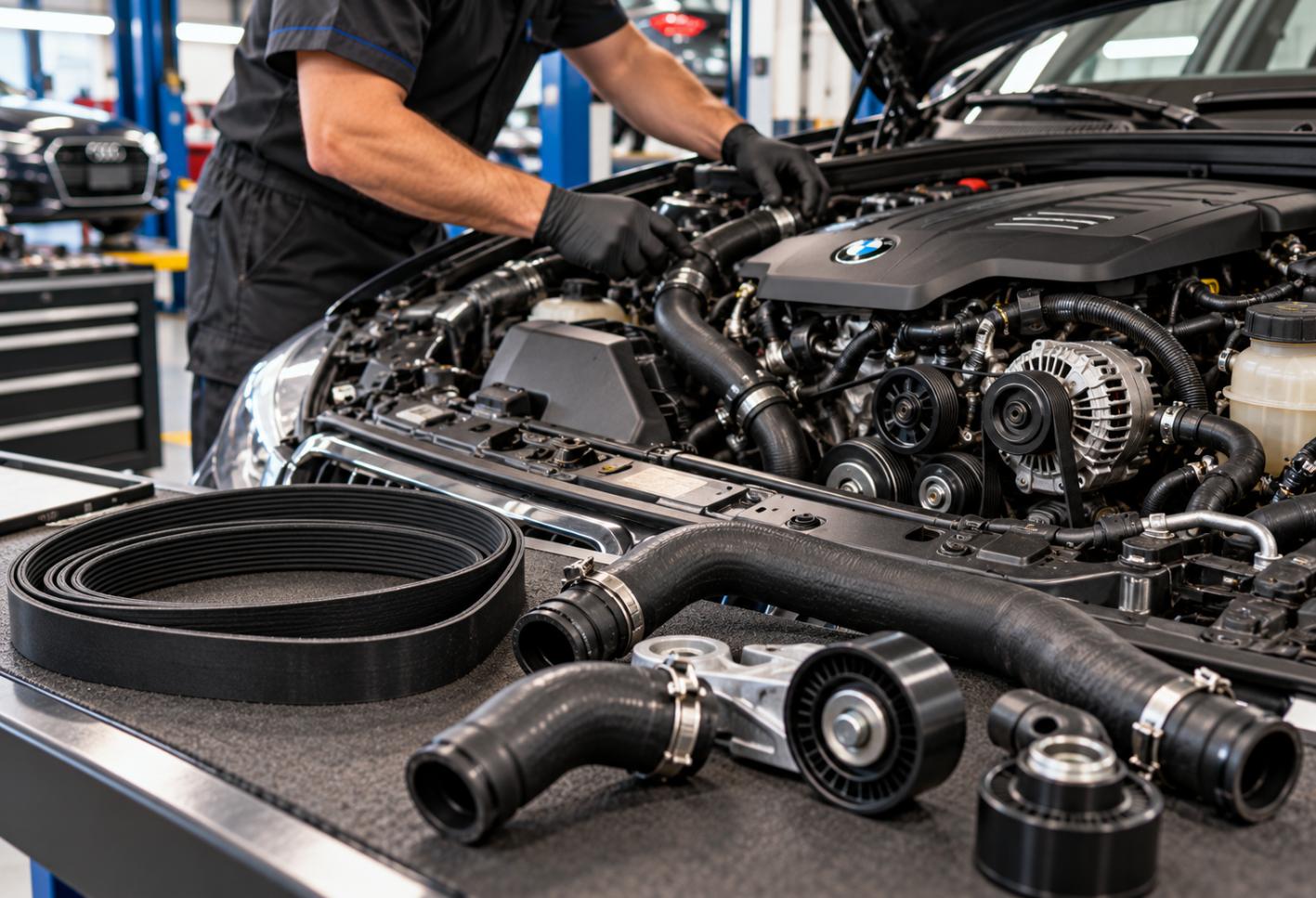
Fort Worth heat can be demanding on any vehicle, and rubber components under the hood face some of the toughest conditions. On German vehicles, aging belts and hoses can turn from routine maintenance items into inconvenient breakdowns if wear is missed.
Quick answer: Belts and hoses on a German vehicle should be inspected regularly and replaced when they show wear, contamination, deterioration, or when the vehicle reaches the manufacturer’s recommended service interval. There is no single replacement mileage that applies to every BMW, Mercedes-Benz, Audi, Volkswagen, Porsche, or other German vehicle. In Fort Worth, sustained summer heat makes routine inspection especially worthwhile.
What Fort Worth Drivers Should Know
-
Replacement intervals vary by manufacturer, model, engine, component, mileage, and age, so your vehicle’s maintenance information should guide scheduled replacement.
-
North Texas heat can increase the thermal stress experienced by rubber and plastic components in the engine compartment.
-
A belt or hose can deteriorate with age even when a German vehicle is driven relatively few miles.
-
Coolant residue, oil contamination, cracking, swelling, fraying, or unusual noises are reasons to have the affected components inspected.
-
Preventive inspection is generally preferable to discovering a deteriorated belt or cooling-system hose during a hot drive on I-35W or I-30.
Why Do Belts and Hoses Matter So Much in Fort Worth?
Belts and hoses matter in Fort Worth because they support critical engine and cooling-system functions while operating in an environment that can become extremely hot. A deteriorated hose may allow coolant to escape, while a worn accessory belt can interfere with components driven by that belt.
Local driving can combine summer heat with stop-and-go traffic around Downtown Fort Worth, the Cultural District, and major commuter routes. Temperatures under the hood can remain high when a vehicle spends time idling or moving slowly.
Tim’s German Auto helps local drivers maintain German vehicles, and we look at these components as part of the larger system rather than treating every visible crack or noise as an isolated problem.
What Do Local Conditions Mean for Belt and Hose Wear?
Local conditions mean Fort Worth drivers should pay attention to age, heat exposure, mileage, and visible deterioration instead of relying on mileage alone. Rubber components repeatedly experience heating and cooling cycles, and Texas summers can add to the demanding environment beneath the hood.
A German vehicle that makes frequent short trips around Tarrant County may experience different wear from one used primarily for longer highway drives. Likewise, a vehicle parked outdoors in North Texas may experience different conditions from one usually kept in a garage.
Rather than assuming a component is safe because the odometer is below a certain number, we recommend following the manufacturer’s applicable maintenance guidance and having questionable components inspected.
What Are the Warning Signs of Worn Belts or Hoses?
Warning signs of worn belts and hoses include cracking, fraying, leaks, swelling, unusual noises, coolant loss, and visible contamination. Some deterioration is easy for an owner to notice, while other problems require closer inspection because damage may occur in less visible areas.
Watch for:
-
Cracks, frayed edges, glazing, or missing material on a belt.
-
Squealing, chirping, or other new noises from the belt-drive area.
-
Coolant spots or residue beneath the vehicle or around hose connections.
-
A hose that appears swollen, unusually soft, brittle, or visibly cracked.
-
Repeated coolant-level loss.
-
Oil or coolant contamination on a belt.
-
A temperature warning or engine temperature that is higher than normal.
-
A warning light or message associated with a related vehicle system.
If a temperature warning appears, continuing to drive may increase the risk of engine damage. Safely stopping the vehicle and arranging appropriate assistance can be the better choice.
When Should You Call a German Auto Repair Professional?
You should call a German auto repair professional when you notice leaks, belt damage, cooling-system warnings, unexplained noises, or deterioration that you cannot confidently evaluate. Owners can perform basic visual checks, but diagnosis and replacement may involve components that should not be handled casually.
A quick look under the hood can reveal obvious coolant residue or a badly damaged belt. However, opening a hot cooling system can cause serious injury, and reaching into the belt-drive area is unsafe while the engine is operating.
For Fort Worth drivers, an inspection before peak summer conditions or a long Texas road trip can also provide an opportunity to identify aging components before they become more disruptive.
What Commonly Causes Belts and Hoses to Deteriorate?
The most common causes of belt and hose deterioration are age, repeated heat cycles, fluid contamination, mechanical wear, and problems elsewhere in the system. North Texas heat can contribute to a demanding operating environment, but replacing a worn part without checking why it failed may leave the underlying problem unresolved.
Age and heat exposure can gradually change rubber materials. Belts may also be affected by pulley, tensioner, or alignment problems, while hoses can be affected by cooling-system pressure, connection issues, or nearby leaks.
Fluid contamination deserves particular attention. If oil or another automotive fluid reaches a belt, simply installing another belt without identifying the leak may not provide a complete repair.
How Can Fort Worth Drivers Help Prevent Belt and Hose Problems?
Fort Worth drivers can help prevent belt and hose problems by following manufacturer maintenance guidance, checking fluid levels, responding to leaks promptly, and including these components in routine inspections. Preventive checks are particularly useful before summer travel or when an older German vehicle has an uncertain maintenance history.
Owners can safely look for fluid underneath a parked vehicle, watch the temperature gauge or warnings, and note new sounds or smells. Keep maintenance records so component age is easier to track.
DIY inspection should stop when it requires opening a hot cooling system, working around moving engine components, or removing parts to reach the belt or hoses.
What Results Should You Expect After Belt or Hose Service?
After appropriate belt or hose service, you should expect the deteriorated component to be replaced and related areas to be checked as appropriate to the repair. The exact work depends on which component failed, why it deteriorated, and whether another problem contributed to the damage.
For example, replacing a leaking cooling-system hose may involve more than installing the hose itself. The system may need the correct coolant procedure and additional checks based on the vehicle and repair.
German vehicles vary considerably between generations and powertrains, so the proper service procedure for one model should not automatically be applied to another.
What Mistakes Should German Vehicle Owners Avoid?
German vehicle owners should avoid choosing replacement intervals by guesswork, ignoring small leaks, and assuming a belt or hose is healthy simply because the vehicle still drives normally. Catching deterioration early can make maintenance easier to plan.
Mistake: Waiting for a belt to break.
Consequence: A sudden failure can leave the vehicle unable to operate normally.
Better approach: Have visible wear or unusual belt noise evaluated.
Mistake: Ignoring a small coolant leak during a Fort Worth summer.
Consequence: Continued coolant loss can eventually contribute to overheating.
Better approach: Find the source rather than repeatedly topping off the system.
Mistake: Replacing a damaged belt without checking nearby components.
Consequence: An unresolved leak, pulley, or tensioner issue may affect the replacement.
Better approach: Diagnose the reason for abnormal wear.
What Is a Common Fort Worth Belt or Hose Scenario?
A common local scenario is an older German vehicle that seems to run normally but begins showing a small coolant leak, belt noise, or visible rubber deterioration as temperatures rise. The driver may be tempted to wait because the vehicle remains usable and the symptom appears minor.
The safer maintenance approach is to have the affected system inspected before assuming the issue can wait. A technician can determine whether the problem involves a hose, connection, belt, tensioner, leak, or another component.
This is a general scenario, not a specific Tim’s German Auto customer case.
Which Services Can Address Belt and Hose Problems?
The right service may include belt inspection or replacement, cooling-system diagnosis, hose replacement, leak diagnosis, or evaluation of related belt-drive components. The appropriate repair should be based on the specific German vehicle and the cause of the wear.
At our shop, the goal is to identify what needs attention and determine whether related components should also be evaluated. That is particularly useful when servicing vehicles with unknown maintenance histories or multiple signs of age-related wear.
Should You Inspect, Repair, or Replace the Component?
Inspection is appropriate when you are establishing the condition of belts and hoses, while replacement is appropriate when a component has reached its specified interval or shows deterioration that makes continued use inadvisable. Related repairs may also be needed when another problem caused the damage.
A visual DIY check can help you spot an obvious issue, but professional inspection is more appropriate when symptoms involve coolant loss, overheating, abnormal belt movement, persistent noise, or difficult-to-access components.
For German vehicles, following model-specific service information is preferable to using a universal mileage rule.
What Areas Do We Serve Around Fort Worth?
We serve German vehicle owners in Fort Worth and the surrounding area who need maintenance and repair support. Drivers may visit us from communities across the Tarrant County area, including nearby Arlington, Keller, and other parts of North Texas.
What Can Happen If You Ignore a Worn Belt or Hose?
Ignoring a worn belt or hose can allow a manageable maintenance issue to develop into a leak, loss of belt-driven functions, overheating, or an unexpected breakdown. The exact consequences depend on the component and vehicle, but waiting for complete failure usually provides fewer repair options and less control over timing.
That matters when temperatures are high or your daily route involves busy corridors such as I-35W, I-30, or Loop 820.
FAQ About German Vehicle Belts and Hoses
How often should belts be replaced on a German vehicle in Fort Worth?
German vehicle belt replacement should follow the manufacturer’s guidance for the specific model and engine rather than a universal mileage interval. Age, condition, contamination, and related component wear can also affect replacement timing. In Fort Worth’s hot climate, regular visual inspection helps identify deterioration between scheduled services.
Does Texas heat shorten the life of automotive hoses?
High temperatures can contribute to the heat exposure and aging that automotive hoses experience, but hose life depends on several factors. Vehicle design, component material, age, mileage, cooling-system condition, and maintenance history all matter. Fort Worth drivers should treat visible deterioration or coolant leakage as a reason for inspection.
Can I inspect my German vehicle’s belts myself?
Yes, you can perform a basic visual check when the vehicle is safely parked and the engine is off, but more detailed inspection may require a professional. Never place your hands near moving belts or pulleys. Cracking, fraying, contamination, or unusual noises should be evaluated before they worsen.
Should I replace every coolant hose at the same time?
Not necessarily, because the correct approach depends on the vehicle, hose condition, age, maintenance history, and reason for the repair. On an older German vehicle in Tarrant County, it can be useful to evaluate other aging cooling-system components when one hose has deteriorated rather than assuming only one component deserves attention.
Is a squealing belt always a sign that the belt needs replacement?
No, a squealing or chirping sound does not automatically mean the belt itself is the only problem. Belt condition, contamination, tension, pulleys, and related components may need to be checked. A proper diagnosis can help Fort Worth drivers avoid replacing a belt while leaving the actual cause unresolved.
Can a leaking coolant hose cause overheating in Fort Worth?
Yes, a coolant leak can reduce the cooling system’s ability to manage engine temperature and may eventually contribute to overheating. This is especially concerning during hot North Texas driving conditions. If the vehicle displays a temperature warning or shows signs of overheating, do not assume adding coolant alone solves the underlying leak.
Should belts and hoses be checked before a Texas road trip?
Yes, checking belts, hoses, coolant condition, and other maintenance items before a long trip can help uncover visible problems before departure. This is especially sensible before summer travel from Fort Worth, when high temperatures and long highway drives can place substantial demands on the vehicle’s cooling and accessory-drive systems.
Does low mileage mean my German vehicle’s hoses are still good?
No, low mileage alone does not establish that hoses are in good condition because automotive components also age over time. A German vehicle that spends much of its time parked can still develop age-related deterioration. Service history, component condition, vehicle age, and manufacturer guidance should all be considered.
Keep Your German Vehicle Ready for North Texas Driving
Belts and hoses may not attract much attention until something goes wrong, but routine inspection can help Fort Worth drivers identify deterioration before a failure interrupts the day. Follow the maintenance guidance for your specific German vehicle and respond promptly when leaks, noises, warning messages, or visible wear appear.
Help Protect Your German Vehicle From an Unexpected Breakdown
We can inspect suspected belt, hose, and cooling-system problems and help determine the appropriate next step for your vehicle.