How Fort Worth Stop-and-Go Traffic Affects Your German Vehicle
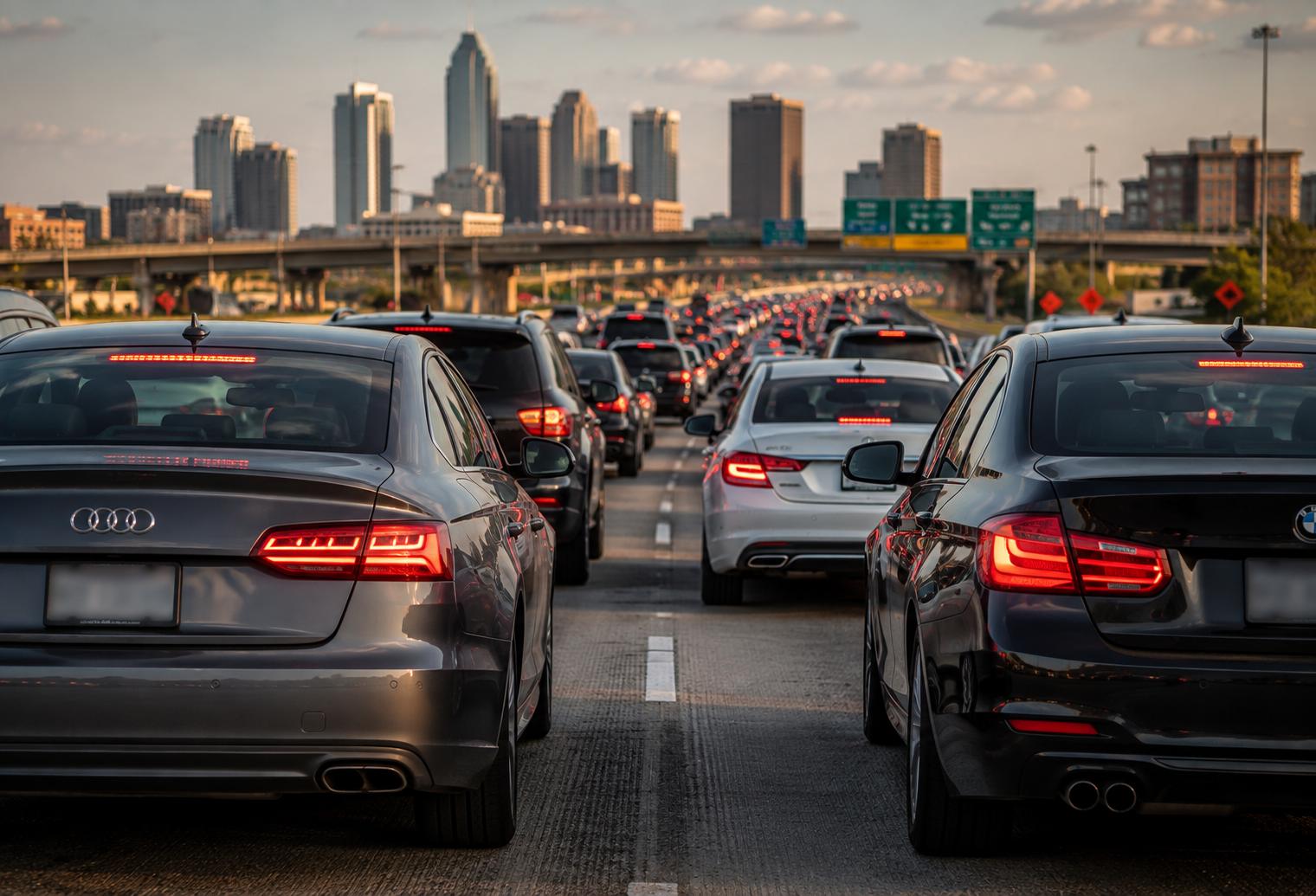
A short drive across Fort Worth can place more stress on a vehicle than a longer trip at a steady highway speed. Congestion on I-35W, Loop 820, I-30, and busy streets near downtown can force German vehicles through repeated cycles of accelerating, braking, idling, and shifting.
That daily routine may feel normal, but it can accelerate wear in several systems that are especially important to the performance, comfort, and efficiency of a German vehicle.
Quick Answer
Stop-and-go traffic increases heat, reduces airflow, and forces your engine, transmission, brakes, cooling system, and electrical components to work repeatedly at low speeds. Over time, frequent congestion can contribute to faster brake wear, fluid deterioration, carbon buildup, battery strain, and cooling system problems. Consistent inspections and maintenance based on actual driving conditions can help Fort Worth drivers identify developing issues before they become larger repairs.
What Fort Worth Drivers Should Know About Stop-and-Go Traffic
Fort Worth stop-and-go traffic creates a severe-use driving pattern because the vehicle repeatedly accelerates, idles, brakes, and operates with limited cooling airflow.
-
Repeated braking on I-35W, I-30, and Loop 820 can wear brake pads and rotors faster than steady highway travel.
-
High summer temperatures across Tarrant County can add extra heat to the engine, transmission, and cooling system during congestion.
-
Short trips through Downtown Fort Worth, the Cultural District, and West 7th may prevent the engine from reaching a stable operating temperature.
-
Extended idling can increase fuel consumption while providing little distance-based mileage to reflect the actual engine operating time.
-
Warning lights, fluid odors, rough shifting, or rising temperature readings should not be dismissed as normal traffic behavior.
Why Stop-and-Go Driving Matters Locally
Stop-and-go driving matters locally because Fort Worth combines recurring traffic congestion with long periods of extreme heat, creating additional thermal stress under the hood.
During slower traffic, the vehicle receives less natural airflow through the radiator and engine compartment. The cooling fans must do more of the work. Air conditioning also places an additional load on the engine, especially during summer commutes when temperatures are high and drivers are sitting in traffic for extended periods.
Routes near the I-35W and I-30 interchange, the North Freeway corridor, Alliance, Downtown Fort Worth, and major Loop 820 connections can involve frequent speed changes. Construction, crashes, lane reductions, and peak commuting periods can turn a routine drive into a prolonged low-speed operating cycle.
Tim’s German Auto helps area drivers understand how these conditions affect German vehicles. After this first mention, we focus on how your real driving habits, warning signs, and maintenance history should guide service decisions.
How Traffic Affects Your Engine and Cooling System
Traffic affects your engine and cooling system by increasing operating time and heat while reducing the airflow that normally helps remove heat at road speed.
At highway speed, air moves naturally through the radiator. In congestion, electric cooling fans must maintain airflow. If a fan, relay, thermostat, water pump, expansion tank, hose, or temperature sensor is beginning to fail, the issue may become more noticeable while idling than while cruising.
Fort Worth heat can make a small cooling system weakness more serious. A vehicle that operates normally during a cool morning drive may run hotter during an afternoon backup on I-35W with the air conditioning running.
German cooling systems often depend on several closely monitored components working together. Ignoring a small coolant leak or intermittent temperature warning can lead to overheating, damaged seals, warped components, or an unexpected roadside breakdown.
How Congestion Affects German Transmissions
Congestion affects German transmissions by forcing frequent low-speed shifts, clutch engagement, and repeated transitions between braking and acceleration.
Automatic, dual-clutch, and automated manual transmissions may all behave differently in heavy traffic. Some systems repeatedly shift between lower gears, while others partially engage clutches as the vehicle creeps forward. This can create additional heat and wear compared with steady-speed driving.
Drivers may notice delayed engagement, harsh shifts, hesitation, shuddering, or an unusual surge when moving away from a stop. These symptoms do not always mean the transmission has failed. They may be related to fluid condition, software adaptation, mounts, sensors, clutch wear, or another drivetrain component.
A proper diagnosis should consider when the symptom occurs, whether the vehicle is hot or cold, and whether the issue appears mainly in slow traffic.
Warning Signs Traffic May Be Taking a Toll
Warning signs of traffic-related wear include changes in braking, shifting, temperature control, idle quality, and electrical performance.
Watch for these symptoms:
-
Brake squealing, grinding, vibration, or a longer stopping distance.
-
A temperature gauge that rises while idling but drops once the vehicle moves.
-
Coolant odors, visible leaks, or repeated low-coolant warnings.
-
Rough idle, hesitation, or shaking during slow traffic.
-
Delayed, harsh, or inconsistent transmission engagement.
-
A battery warning, slow engine cranking, or electrical features behaving inconsistently.
-
Air conditioning that becomes warmer when the vehicle is stopped.
-
A burning smell after a congested commute.
A warning that appears only during traffic still deserves attention. Heat and low-speed operation may be exposing a weakness that is not noticeable during easier driving.
Common Traffic-Related Causes of Premature Wear
The most common traffic-related causes of premature wear are repeated braking, excess heat, extended idling, short trips, and reduced airflow.
1. Frequent Braking
Heavy traffic around Downtown Fort Worth, West 7th, and major freeway interchanges requires repeated brake application. This creates heat in the pads and rotors. Aggressive acceleration followed by hard braking increases that heat further.
2. Prolonged Heat Exposure
Vehicles stuck in summer traffic may operate for long periods with the engine, transmission, cooling fans, and air conditioning system under load. Aging fluids and plastic cooling components can become more vulnerable under these conditions.
3. Repeated Low-Speed Shifting
Creeping traffic can cause a transmission to shift, release, and re-engage many times within a short distance. This is especially relevant for dual-clutch systems that may not respond to slow crawling in the same way as a traditional automatic transmission.
4. Short Urban Trips
Brief trips in areas such as the Near Southside, Arlington Heights, or the Cultural District may not allow the engine oil and exhaust system to remain fully warmed for long. Repeated short-trip use can contribute to moisture accumulation, deposits, and battery drain.
5. Extended Idling
Idling adds engine operating time without adding many miles to the odometer. Mileage alone may not fully represent how hard the vehicle has worked.
Brakes and Tires in Fort Worth Traffic
Brakes and tires experience accelerated wear in Fort Worth traffic because repeated stops generate heat and frequent acceleration places additional demand on the contact surface.
Brake pad wear may be uneven if a caliper begins sticking or if one wheel is operating hotter than the others. Rotor vibration can also become more apparent after repeated high-temperature stops.
Tires may develop uneven wear when alignment, suspension, or inflation problems are present. Potholes, construction zones, curbs, and rough pavement around Tarrant County can add to these issues.
Drivers should monitor tire pressure when the tires are cold and inspect for cracking, bulges, low tread, or uneven shoulders. Steering pull, vibration, or unusual road noise may indicate a tire, wheel, alignment, or suspension concern rather than a traffic issue alone.
Battery and Electrical System Strain
Stop-and-go traffic can strain the battery and electrical system because cooling fans, air conditioning, lights, infotainment, and safety systems may operate heavily at low engine speeds.
Modern German vehicles contain numerous control modules and electrical accessories. During a hot afternoon commute, the charging system may be supporting the blower motor, radiator fans, seat ventilation, phone charging, navigation, lights, and other components at once.
A weak battery may still start the vehicle under ideal conditions but fail after repeated short trips or extended accessory use. Low voltage can also trigger multiple warning messages that appear unrelated.
Battery testing, charging-system evaluation, and proper battery registration or programming may be necessary depending on the vehicle.
When to Call a German Auto Professional
Call a German auto professional when a warning light, temperature change, fluid leak, shifting problem, brake concern, or recurring traffic-related symptom appears.
Drivers can safely monitor fluid levels when the vehicle is cool, check tire pressure, listen for new sounds, and note when a symptom occurs. It is also helpful to record whether the issue appears during cold starts, hot idling, highway driving, or only after extended congestion.
Professional service is appropriate when:
-
The engine temperature rises above its normal range.
-
A red warning light appears.
-
The vehicle loses coolant or another fluid.
-
Braking performance changes.
-
The transmission slips, shudders, or engages harshly.
-
The engine stalls or runs roughly.
-
A burning odor or smoke is present.
-
The vehicle enters reduced-power or limp mode.
Do not open a hot cooling system. Pressurized coolant can cause serious burns.
Preventing Traffic-Related Wear
Traffic-related wear can be reduced through smooth driving, timely fluid service, cooling system inspections, battery testing, and maintenance based on severe-use conditions.
Leave enough distance to coast instead of repeatedly accelerating and braking. Avoid crawling forward a few feet at a time when traffic is completely stopped. For some dual-clutch vehicles, allowing a larger gap before moving can reduce repeated clutch engagement.
Before the hottest months, have the cooling system inspected for leaks, weak hoses, fan operation, and aging components. Brake thickness, rotor condition, tire wear, and fluid condition should also be checked regularly.
Oil service intervals should reflect driving habits, not mileage alone. A vehicle used mainly for short trips around Fort Worth may accumulate significant engine hours even when annual mileage remains low.
Common Maintenance Mistakes
Common maintenance mistakes include relying only on mileage, ignoring intermittent warnings, and treating all German vehicles as though they use the same fluids and procedures.
Mistake: Waiting for a warning light to stay on permanently.
Consequence: Intermittent heat, voltage, or sensor problems may worsen before the warning becomes constant.
Better approach: Schedule a diagnostic inspection when the same warning returns.
Mistake: Assuming low mileage means light use.
Consequence: Hours of idling and short-trip operation may not be reflected on the odometer.
Better approach: Consider time, engine hours, trip length, and congestion.
Mistake: Installing a generic battery without required programming.
Consequence: The charging strategy may not match the replacement battery.
Better approach: Follow the correct battery specification and registration procedure for the vehicle.
Mistake: Continuing to drive with a coolant smell.
Consequence: A small leak may become a major cooling system failure in summer traffic.
Better approach: Have the system pressure-tested and inspected.
A Common Fort Worth Driving Scenario
A common Fort Worth scenario involves a German vehicle that operates normally during a morning commute but shows symptoms during a hot afternoon traffic backup.
The driver may notice the air conditioning warming at idle, the temperature gauge moving higher, or the cooling fan running loudly. Once traffic clears, the symptoms may lessen.
That pattern can point toward a cooling fan, refrigerant, charging-system, thermostat, water-pump, airflow, or cooling-system issue. It should not be treated as proof of one specific failure. A technician needs to test the system under conditions that reproduce the concern.
Related German Auto Service Solutions
Related service solutions include cooling system diagnosis, brake inspection, transmission evaluation, battery testing, fluid service, and manufacturer-specific diagnostic scanning.
A complete inspection can help separate normal operating behavior from developing mechanical or electrical problems. The right service depends on the vehicle, mileage, maintenance history, symptoms, and fault data.
DIY Monitoring vs. Professional Diagnosis
DIY monitoring is useful for basic observations, but professional diagnosis is the safer choice when symptoms involve temperature, braking, shifting, electrical faults, or fluid loss.
Drivers can check tire pressure, look beneath the parked vehicle for fresh leaks, and record dashboard messages. They can also describe the route, outside temperature, and traffic conditions when the problem appears.
Professional equipment is needed to evaluate fault codes, live temperature data, fan commands, battery condition, charging output, transmission behavior, and system pressure. Replacing parts based only on a generic code description can waste money and leave the actual cause unresolved.
Service Areas
Our German auto services support drivers in Fort Worth and surrounding parts of Tarrant County. Local customers may travel from nearby communities such as Benbrook, White Settlement, Haltom City, North Richland Hills, and Arlington.
Service availability for a specific vehicle or repair should be confirmed directly with our shop.
The Cost of Ignoring Traffic-Related Symptoms
Ignoring traffic-related symptoms can turn routine wear into a more expensive repair, especially when heat, low fluid levels, or reduced braking performance are involved.
A weak battery can leave a driver stranded. A minor coolant leak can become an overheating event. Worn brake pads can damage rotors, while unresolved transmission symptoms may place additional stress on drivetrain components.
Fort Worth traffic makes reliability especially important because a breakdown on a congested freeway creates safety concerns and towing complications.
Frequently Asked Questions
Does Fort Worth traffic wear out German vehicle brakes faster?
Yes, Fort Worth traffic can wear brakes faster because repeated stops create more friction and heat than steady-speed driving. Actual wear depends on vehicle weight, driving style, brake materials, route, and maintenance. Squealing, vibration, grinding, or longer stopping distances should be inspected promptly.
Can idling in Fort Worth heat cause a German vehicle to overheat?
Yes, idling in Fort Worth heat can expose a weak cooling system because the vehicle depends heavily on electric fans at low speeds. A properly functioning system should control temperature, but low coolant, fan problems, a failing thermostat, or water-pump issues may cause overheating.
Why does my air conditioning get warmer in traffic?
Air conditioning may become warmer in traffic when condenser airflow decreases or when a fan, refrigerant, compressor, or electrical problem is present. Fort Worth summer heat makes this symptom more noticeable. A technician can compare vent temperature and system pressures at idle and at higher engine speeds.
Are short trips around Tarrant County hard on a German engine?
Yes, repeated short trips can be hard on an engine because the oil, battery, and exhaust system may not remain at normal operating temperature long enough. Short-trip use may contribute to moisture, deposits, battery discharge, and accelerated oil contamination even when annual mileage is low.
Should maintenance intervals change for heavy Fort Worth traffic?
Maintenance timing may need to reflect heavy Fort Worth traffic because mileage does not capture all idling, heat exposure, and repeated low-speed operation. Follow the manufacturer’s requirements, but also discuss your commute, trip length, and driving pattern with a qualified technician.
Is creeping traffic bad for a dual-clutch transmission?
Frequent creeping can increase clutch engagement and heat in some dual-clutch transmissions. Drivers should avoid unnecessary inching when traffic is fully stopped and leave enough space to move smoothly. Vehicle-specific operating guidance matters because transmission designs and control strategies vary.
Why does my German vehicle show warnings only in traffic?
Warnings may appear only in traffic because heat, low airflow, and high electrical demand expose a developing problem. Once the vehicle reaches open road, increased airflow or engine speed may temporarily reduce the symptom. Stored fault data can still help diagnose the cause.
Can Loop 820 construction and rough pavement affect my tires?
Yes, rough pavement, lane shifts, potholes, and construction debris around Loop 820 can contribute to tire, wheel, alignment, and suspension problems. Check for vibration, steering pull, pressure loss, sidewall damage, and uneven tread wear after a significant impact.
Protect Your German Vehicle From Fort Worth Traffic Wear
The right maintenance plan can help your German vehicle handle local heat, congestion, and daily commuting with fewer surprises.
We evaluate the symptoms, driving conditions, and vehicle-specific systems before recommending service.